,
|
|
 |
 |
 |
 |
 |
 |
 |
 |
 |
 |
|
Our project does not have a strident voice, but has been quietly and steadily sustained by teachers working together to put talk at the centre of learning in multilingual settings since the 1960s. Small circles and quiet processes. |
29th April 2026
|
The SATEAL teachmeet was as usual lively and stimulating. Our seven minute presentation on the power of conversation plumped for this chiasmic title: -not everything that counts can be counted: not everything that can be counted counts Blog link on the right
|
|
26th April 2026 |
The delayed LATE winter conference evolved into a spring conference and took place on 18th April at the London Institute of Education. Reading was the theme. We welcomed a lot of new to LATE participants. A lot of creative networking took place. Teachers valued the opportunity to meet and discuss issues rarely visited in school. The presentations will be available on the LATE website soon. LATE welcomes ideas for the next conference. I would choose the poetry of protest as a theme. What do you suggest? |
6th January 2026 |
We are putting together some headline statements for CL. Please suggest some more |
6th January 2026 |
Collaborative activities are best created by teachers working together. |
6th January 2026 |
Collaborative activities create an opportunity to engage and interrogate subject knowledge in an unthreatening environment. |
6th January 2026 |
Collaborative activities are planned in partnerships of classroom and subject teachers with EAL teachers. |
6th January 2026 |
Collaborative activities provide a rich environment in which children new to English can acquire their new language in dialogue with their peers. |
24th November 2025 |
Teaching the Curriculum: Dialogue or Delivery? Here is a link to the 2025 Harold Rosen Memorial Lecture by Carol Atherton. Thank you NATE for making it accessible to all. |
8th December 2025 |
Have you been to see the latest exhibition of 350 mudlarking artefacts at the Museum of London? We are currently developing a connected collaborative activity and welcome your contributions. Have you already tried out our other Thames related activities?: Ship Ahoy or Whitechapel Road |
17th November 2025 |
Our Research Helter Skelter has a 'new' but old and still relevant addition from Jim Cummins: Pedagogy for the poor? If you currently think systematick fonics encourages and improves reading, for pleasure or serious stuff, you need to read it. |
6th November 2025 |
The date and details of the LATE winter conference will appear soon. |
21st July 2025
|
I met the southern counties EAL coordinator group (SASSEA) on 7th July in Winchester. We decided to jointly develop more collaborative activities.
|
21st July 2025
|
LATE's "Talking about Oracy" conference on 5th July was a great success. We'll post links to presentations shortly.
|
 |
Oracy again! |
NATE's annual conference at Kingston University took place on 1st July We joined colleagues for the Multicultural Diversity working group presentation. |
30th March 2025 |
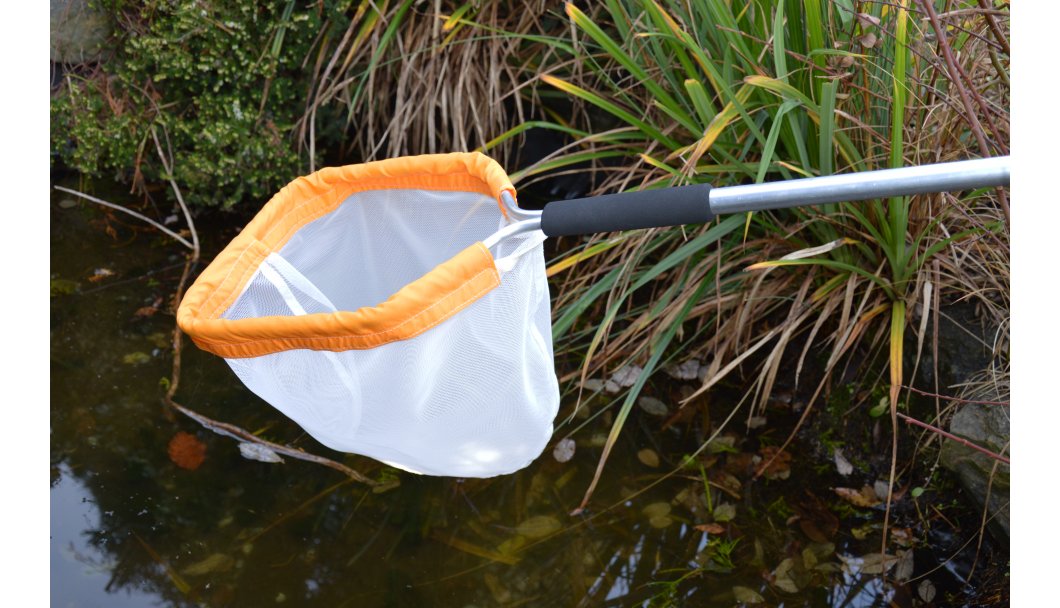
Pond Dipping is the first resource featured on our new Wales Ape and Monkey page.
|
 |
17th March 2025 |
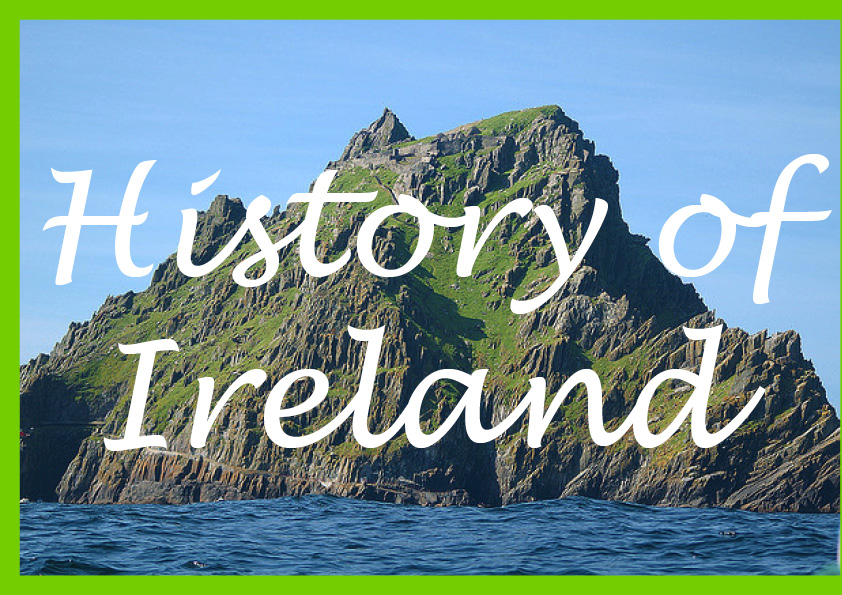
The Great Hunger is a history topic that all schools need to study. The causes of the famine: blind faith in free markets and the belief that poverty is deserved still impact the world today.
|
 |
14th March 2025 |
The ASE is encouraging science teachers to explore ways to scaffold oracy in science classrooms. We worked with science teachers to trial catalysts for talk in science lessons in earlier oracy initiatives. You can see examples of paper based activities on our science pages. We hope to work with ASE inclusion committee to produce more. Next meeting in October.
|
7th February 2025 |
Working with parents? Thinking of ways to encourage them to have purposeful conversations around books? Why not explore our minibooks ideas, which work with every age group. Remember Wombat Diaries?Also Mantra's storytelling theatre. And don't forget about chatterboxes. |
6th February 2025 |
Thanks to all the colleagues who came up with reset ideas for the future of the project. NALDIC was unable to include our proposed workshop at their conference on 30th November so we will explore running it as part of a RIG/SIG. Remember these NALDIC networking meetings are open to all and very empowering if you are isolated. You don't have to be a member of NALDIC to join in, and because they are on Zoom you can access them wherever you may be. CLP welcomes the latest NALDIC initiative to increase work on activism. They may be constrained by their charity status. CLP is not constrained and will try to fill the gaps. CLP helps to put the IC in NALDIC. |
25th January 2025 |
The most recent LATE Conference was on 25th January: "What space for English? English Teachers, Agency and Control." This was lively and interesting. LATE, unlike NATE, is not constrained by charity status. |
21st May 2024 |
Thank you so much Better Bilingual for a successful resources development workshop at Glenfrome School in Bristol on 21st May. Hopefully the group will continue to work together and share their results with us! |
18th March 2024 |
Our March blog post concentrates on the power of conversation at a time when teachers are being told to shut up and follow instructions from their leaders. In the current climate there is very little time and opportunity for teachers to talk to each other and plan together. This has an impact on the quality and quantity of classroom talk. Let's concentrate on seeking out more time for this.
|
14th March 2024 |
10th January 2024 |
Bridget Phillipson, Labour's designated Minister for Education, has written to us asking for help and advice. We have responded and reminded her that in 1997, we also provided similar advice for the new Labour administration, which was ignored. Talk for learning must be given space and a voice in Labour's education plan. Please add your voice to ours. |
23rd November 2023 |
6th November 2023 |
Mantra Lingua are promoting Storytelling Theatre: a brilliant reworking of Storyprops without all the effort of colouring in! Playful conversations in English and home languages at EYFS and KS1 improve the frequency of purposeful conversations in KS2 and up, which seriously reduce the need for interventions. |
23rd October 2023 |
The NALDIC North East Regional Group held a popular and informative meeting on 18th October. We are continuing to explore other ways to network scaffolding on line and welcome suggestions. We strongly support NALDIC RIGs and think they alone are worth our NALDIC subscription. They are open to all. You don't have to belong to NALDIC to join nor do you have to come from the region that hosts it.
|
5th October 2023 |
National Poetry Day! Our Blue Booby (currently looking for a new nest) recommended one of our sorting board activities to encourage poetry phobic pholk to read and talk about very short poems. Do try them our and if you have made your own poetry sorting activities please share them with us!
|
16th September 2023 |
We are celebrating our fortieth anniversary this year, but the real beginnings of of the project go all the way back to a teacher workshop in Birmingham in 1966. We have just updated our history page if you would like to know more.i |
11th August 2023 |
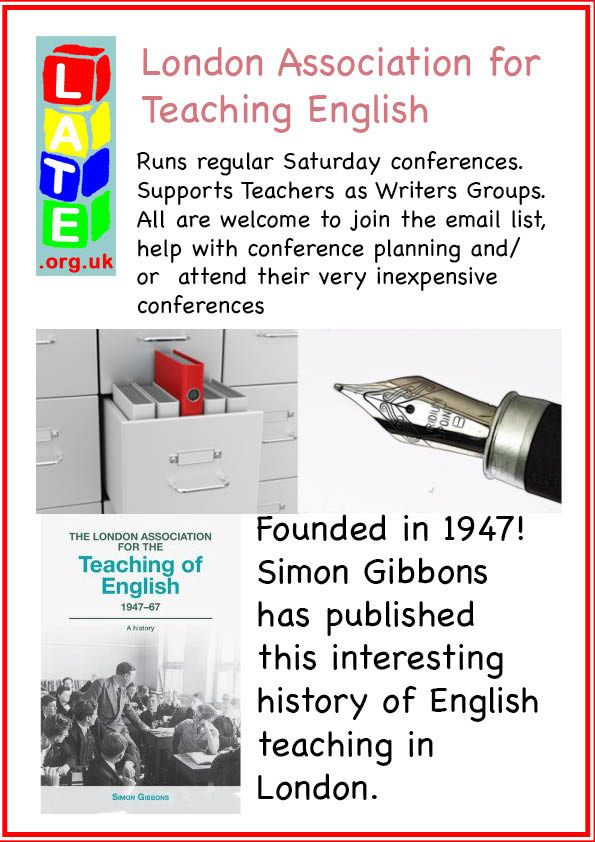
NATE is celebrating its sixtieth birthday this year. The London Association for Teaching English started conversations about the role and purpose of the subject English in 1947. Its members encouraged careful observations and purposeful conversations. Teachers countrywide envied their work and many set up local associations. Our project was inspired by the work of the Birmingham association led by Andrew Wilkinson in the mid sixties and has been linked to NATE ever since. In 1963 an HMI suggested that the local associations join up to become a national association. Simon Gibbons has written a history of LATE, but the history of NATE and the other associations is still to be written. Early volumes of English in Education are full of accounts that demonstrate how the work of the associations empowered teachers. We have suggested to NATE that they set up a podcast where current members can present articles that inspired them. We'll let you know if this happens. So far no progress! (7th February 2025) |
7th July2023 |
Keir Starmer has indicated that oracy will be a priority for Labour's future Education plan. We think we can help him and provide advice as we did in 1997. The true meaning of oracy is not just about confidence in speaking in public, but rather the opportunity for playful, purposeful and exploratory conversations at every phase and in every subject. Listening is as important as speaking. Keir will no doubt be cheered to discover that oracy is cheap to disseminate. This means that there is no need for delay in implementing a policy to promote talk for learning. The only issue is that those who see teaching as delivery find classroom talk threatening. Our constant priority is to provide scaffolding and encouragement for teachers in every subject and at every phase. Please add your voice to ours. |
30th June 2023
|
Education North West (US) have sent us the link to their video on how teachers can help English learners build their language skills while they learn complex content? There is a strong similarity to our 1989 partnership videos posted in our Research Helter Skelter and the message has not changed after thirty five years! |
30th June 2023 |
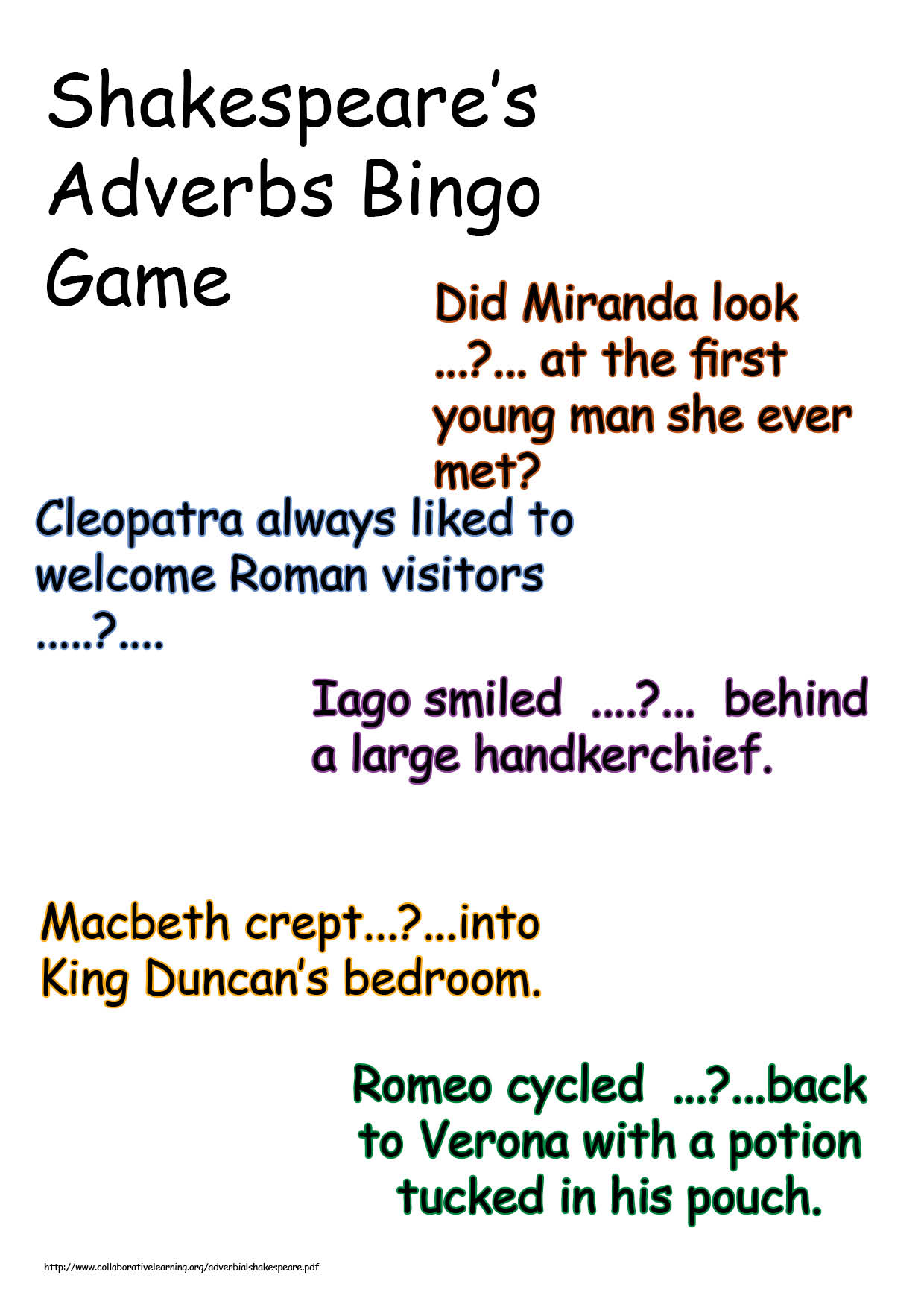
Please try out and tweak our latest zany activity. Imaginative adverbs and Shakespearean plots plus loads of anachronisms. If you can persuade students to do something simple and playful together they will later jointly attempt something more difficult and challenging. |
 |
26th June 2023 |
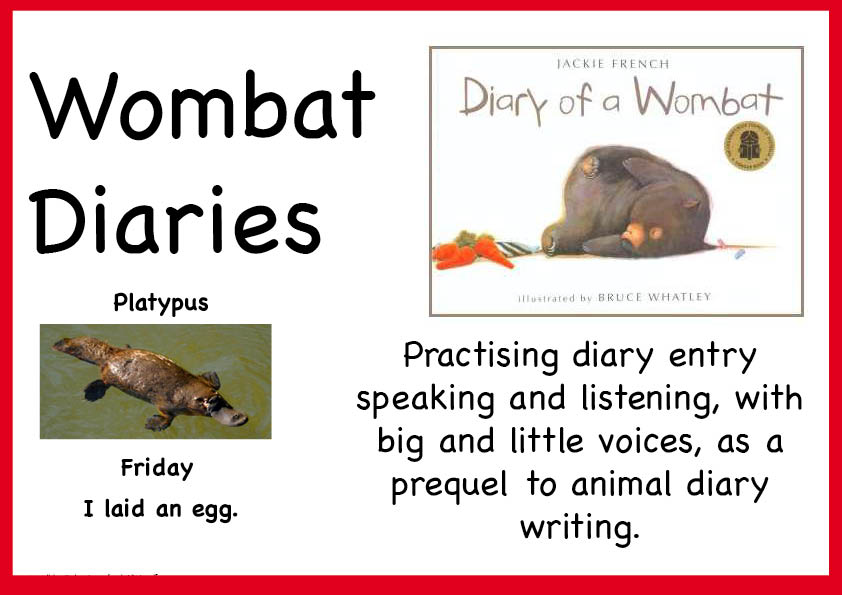
Our latest updated literacy with oracy activity is Wombat Diaries scaffolding diary writing for Year 2 up. Quiet exploratory talk: oracy at its best. |
 |
22nd June 2023 |
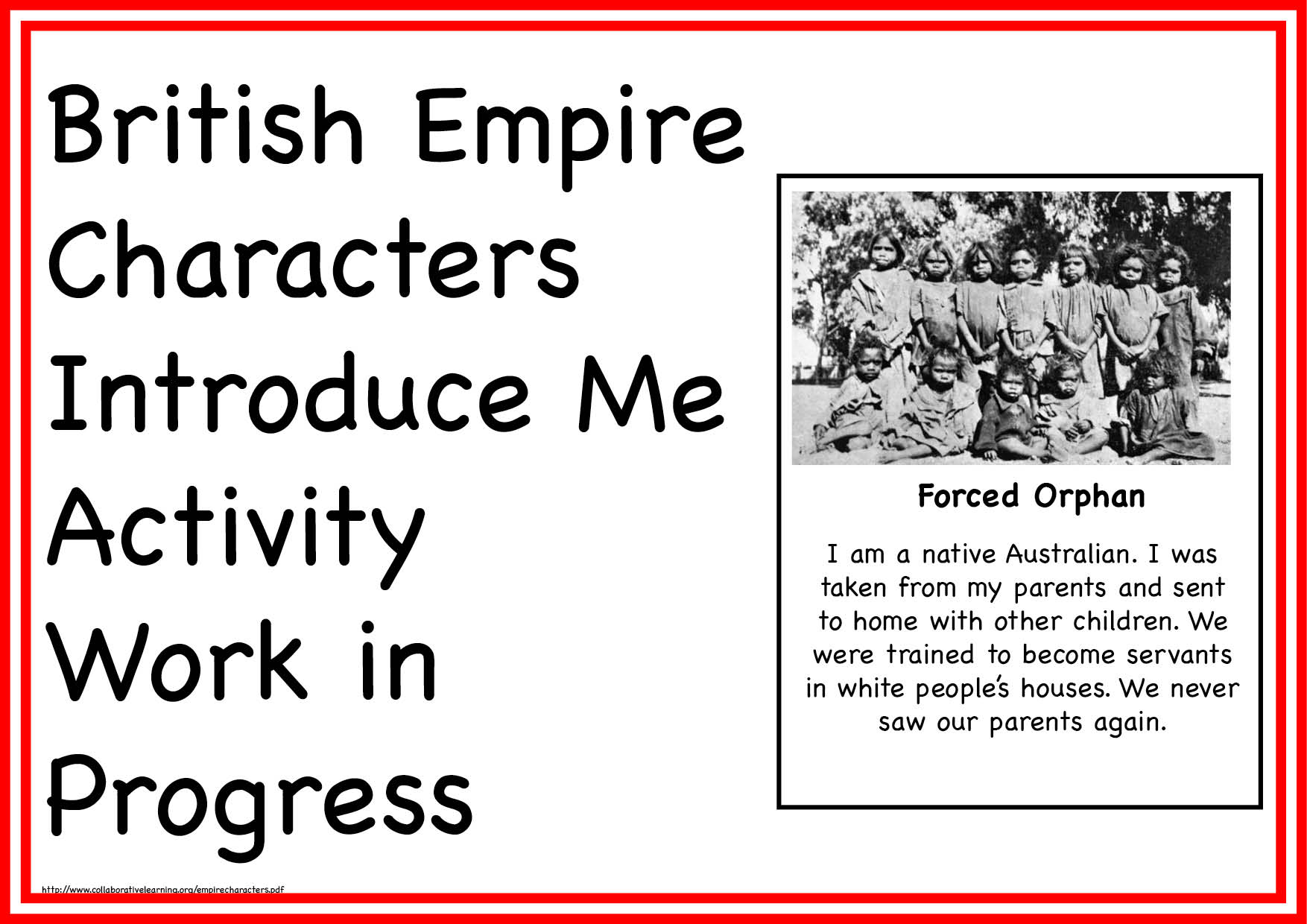
Windrush Day! We are inviting you to help us revise and add to our British Empire characters Introduce Me activities. |
 |
|
21st June 2023 |
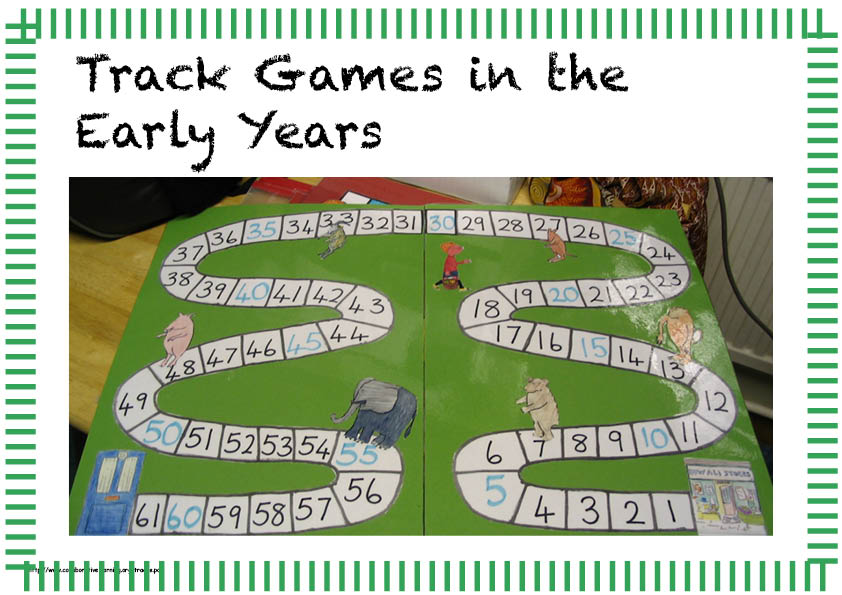
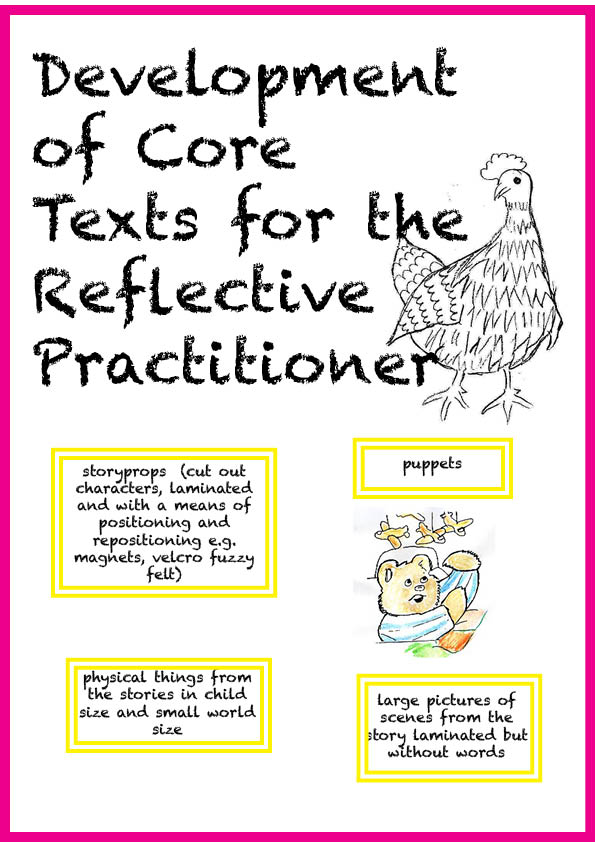
A recent NALDIC SIG on working with parents links in with our Early Years guides for games making workshops. |
 |
 |
16th June 2023 |
Is your school, pressured by Ofsted, buying off the peg schemes of work that fail to address inclusion? |
We are concerned to hear that this is happening and more children are being excluded from mainstream classes. |
13th June 2023 |
We have just reread and want to endorse the EEF's literacy guidance documents, which were revised just before and during COVID. |
6th June 2023 |
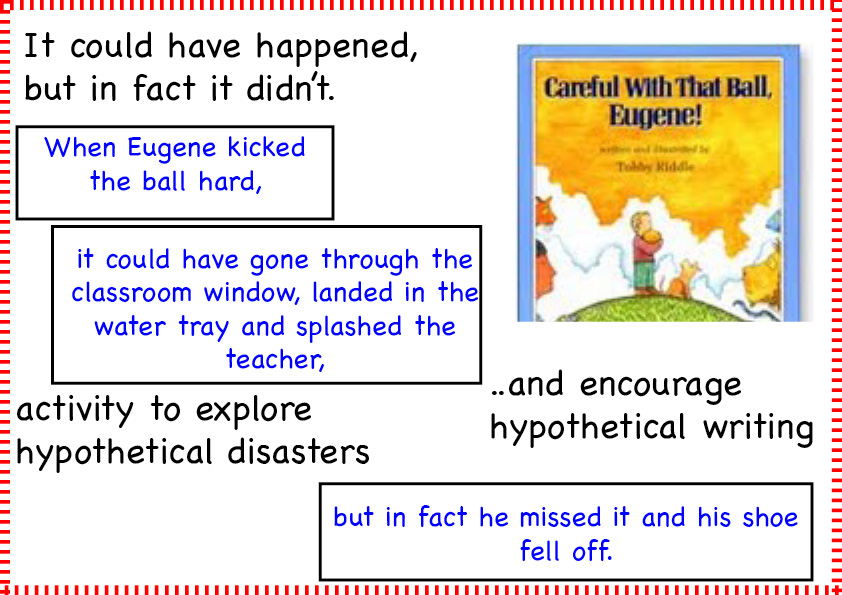
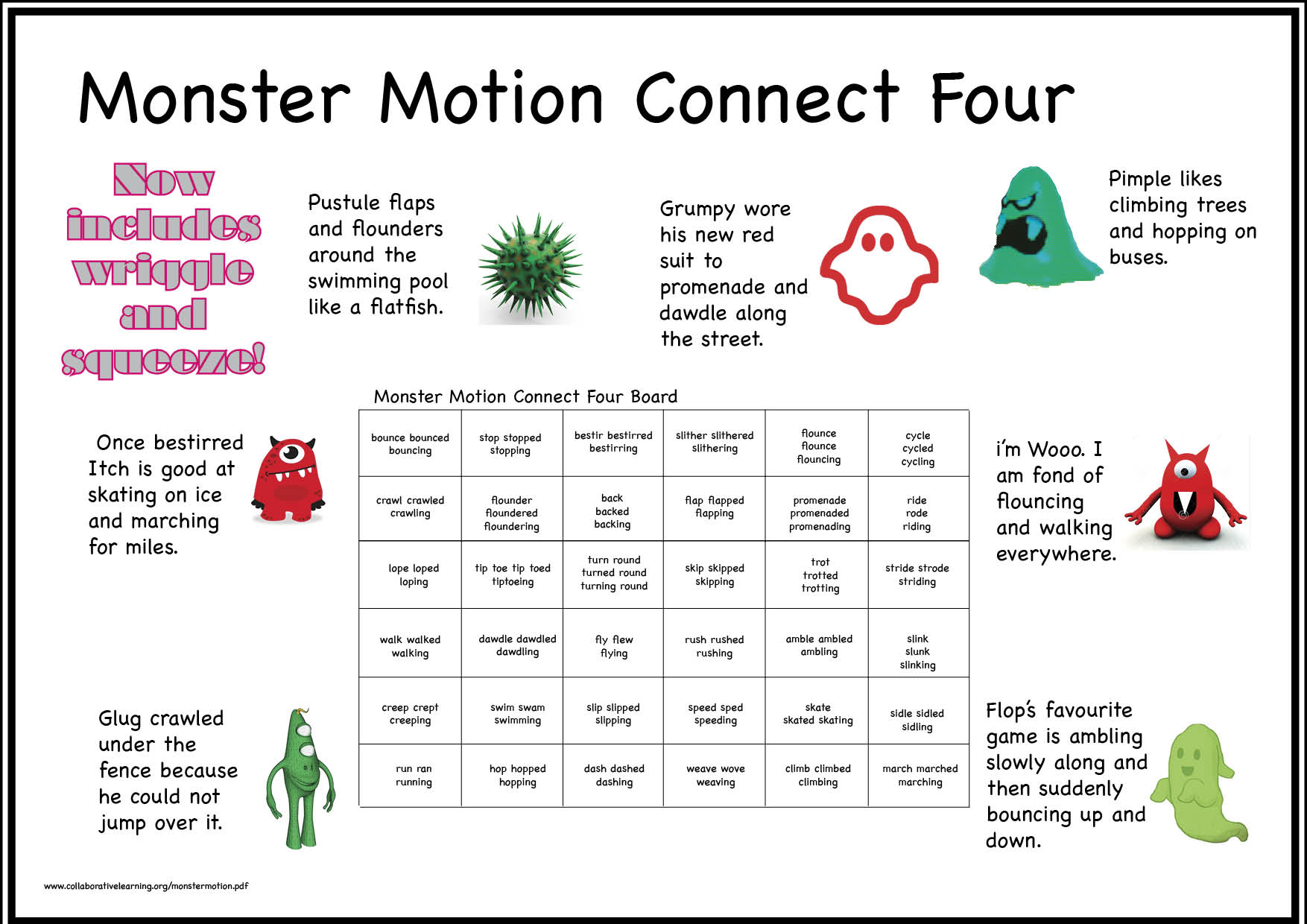
The success of Monster Motion has persuaded us to revisit and rework more of our literacy activities. The aim is two fold: to inspire creative talk around the way language works and encourage collaborative production of rich narratives. All our activities are produced by teachers planning collaboratively. Would you like to join us and crowdfund with your ideas? This activity looks at would, could, should and ....
|
 |
24th May 2023 |
We have now added the words that the SATs writers sneaked into the test. Can you help us make sure that this doesn't happen again? Thank you to everyone who sent in words and if you send a few more we will have enough to make a new game.
|
 |
19th May 2023 |
Chatter matters. We are always on the lookout for research that reconfirms our very long held views on the importance of talk for learning. The recent research from the University of East Anglia on the impact of talk on the growth of myelin reached the national newspapers. The Conversation has John Spencer's very accessible account of the research. Here is a link: |
Education, like everything else at the moment, is growing more unequal. Warwick Mansell's new website gives you insight into the detail: |
"One school academy trust with fewer than 250 pupils pays its leader 400K a year" |
Thought for SATS WEEK |
Not everything can be counted that counts. Not everything that counts can be counted. |
23rd February 2023 |
Here is the link to our presentation for 23rd February Inside Government Conference on EAL. We gave this to them for free so didn't impact on their profits. |
|
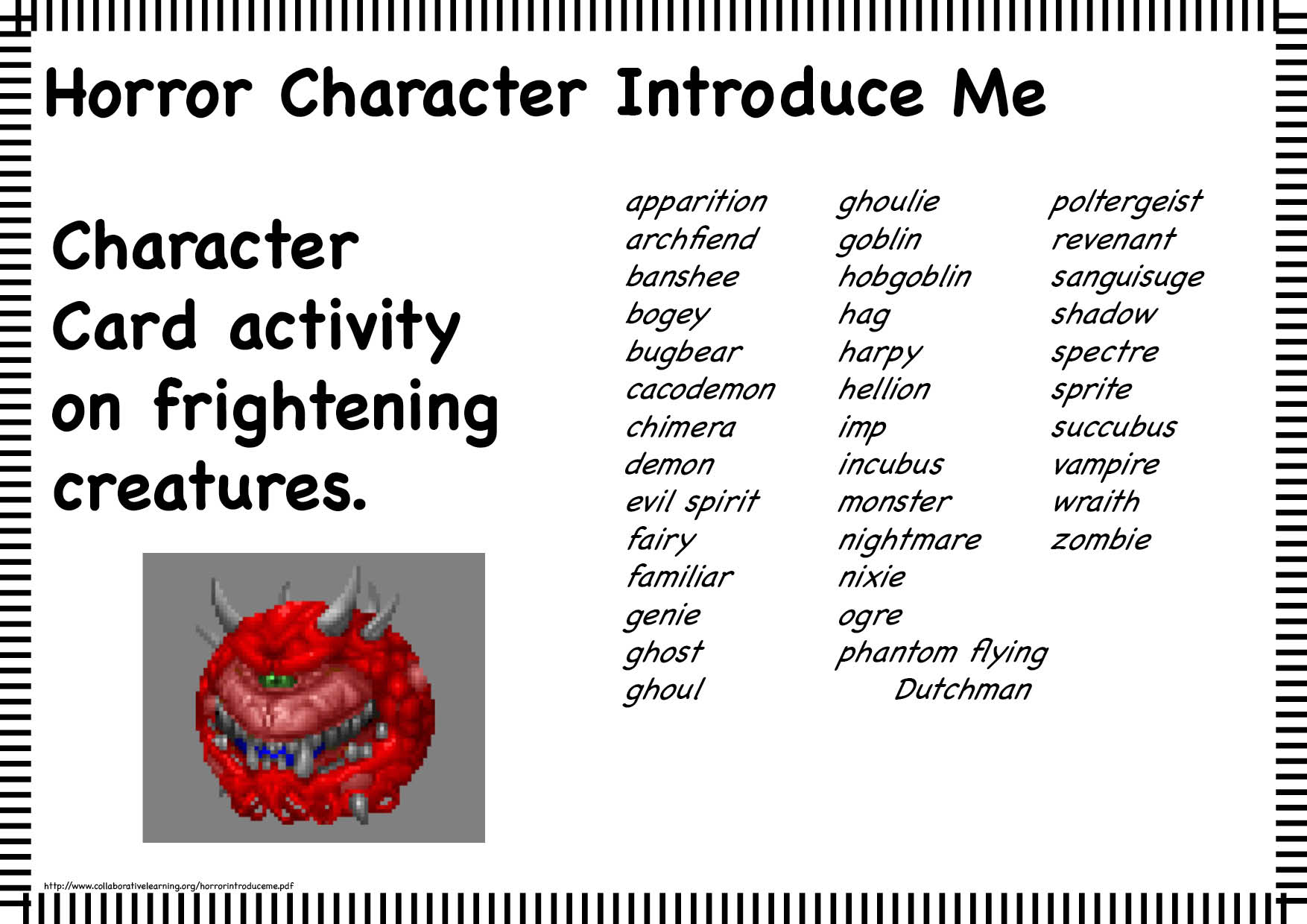
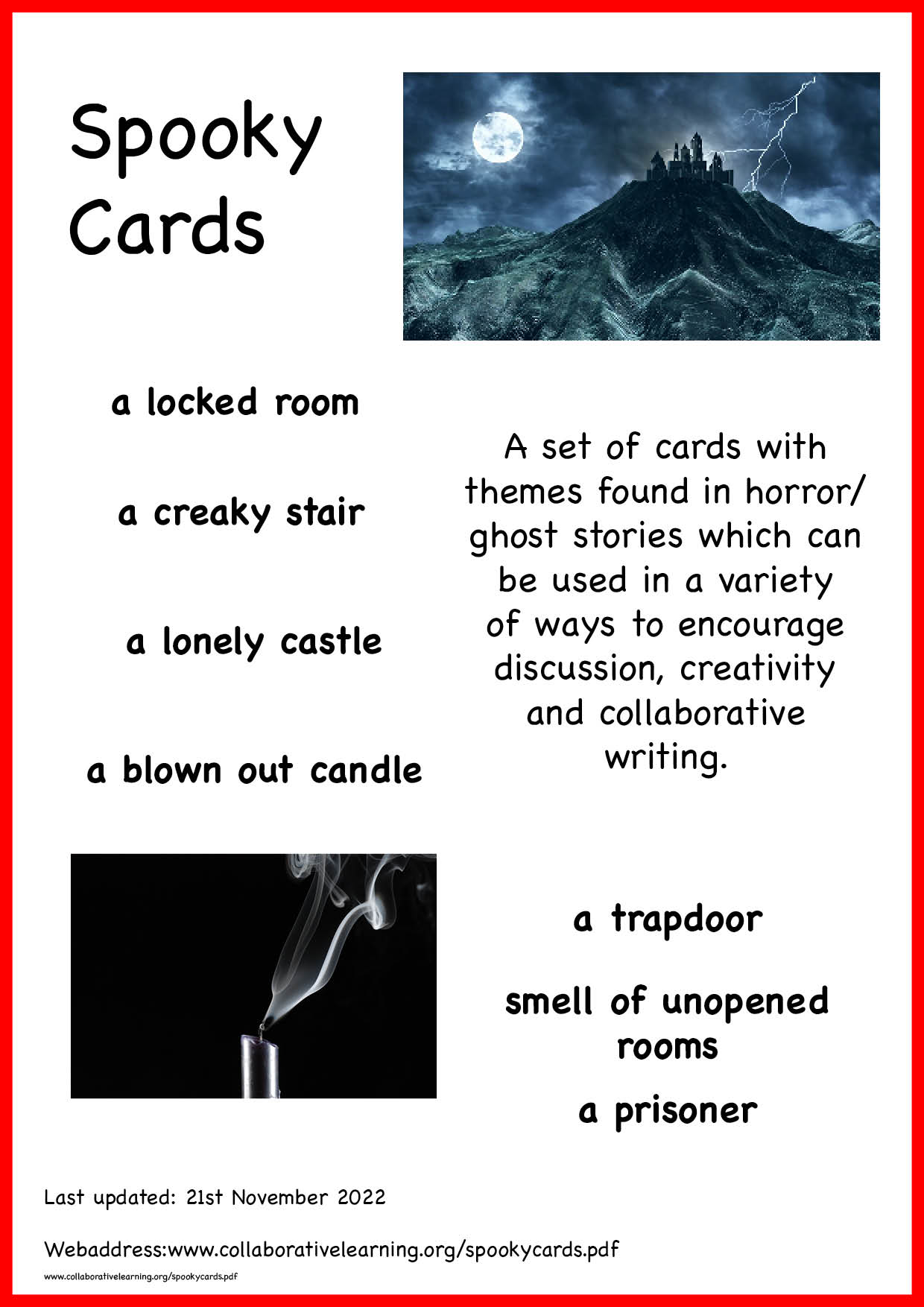
Thank you colleagues from the LATE "Nightmare in the English Corridor" conference who offered themselves and their students to help improve our new horror activities (see below). And also thanks for the positive feedback on our Gothic Story Kit. We are also looking for help on activities for Mantra books, more work on Japan and primates and adapting our Bradford barn activities for similar buildings. Plus we are revisiting the Runaway Pea and adding more languages. Lastly inspired (or rather shocked) by the Thames Water Interactive Map of Very Dirty Leaks, we are revisiting our work on water and pollution. And, of course, we are open to suggestions from you. |
5th December 2022 |
 |
 |
24th November 2022 On 18th October we spent a very enjoyable day with Hillingdon Primary history and geography coordinators at Harmondsworth Great Barn and on the neighbouring Moor exploring ways in which this rich resource next door to Heathrow airport can support History, Geography and Citizenship teaching. We have now posted the resources we shared. Click on the barn picture to take a look at our London Humanities page which we hope coordinators for subject areas in London and beyond will find useful. We'll keep adding info and the most recent update is a video about a village nextdoor to the CDG airport in Paris and its interesting history. |
|
3rd November 2022 Very successful and enjoyable meeting of East Midlands NALDIC RIG including powerful presentation on negative impact of setting on EAL students (and nearly everyone else too!) Another example of the importance of well targeted research. You may want to look at what the EEF says about it.
|
|
1st November 2022 How many of you find our research pages interesting, challenging, useful?? Our aim is to present impactful research in small bites for busy teachers. We also welcome our colleagues in ivory towers to contribute items for our Research Helter Skelter. Stephen Krashen has just reminded us of his paper about the importance of keeping papers short. You can read it here or on the HelterSkelter. |
|
20th October 2022 Another posting on our Joined in Thinking blog. This time we are looking at scaffolding purposeful conversations using pictures |
|
16th October 2022 Stephen Krashen's thinking has had a profound influence on our work. His website is on our links page and we have just posted his article on Non Targeted Comprehensible Input on our Research Helter Skelter. |
|
1st October 2022 Our Web Log has returned and the most recent posting is about the importance of finding short amounts of time to listen and record the language of children new to English. You may be shocked to discover very important information that can alter your assessment and teaching plans.
|
|
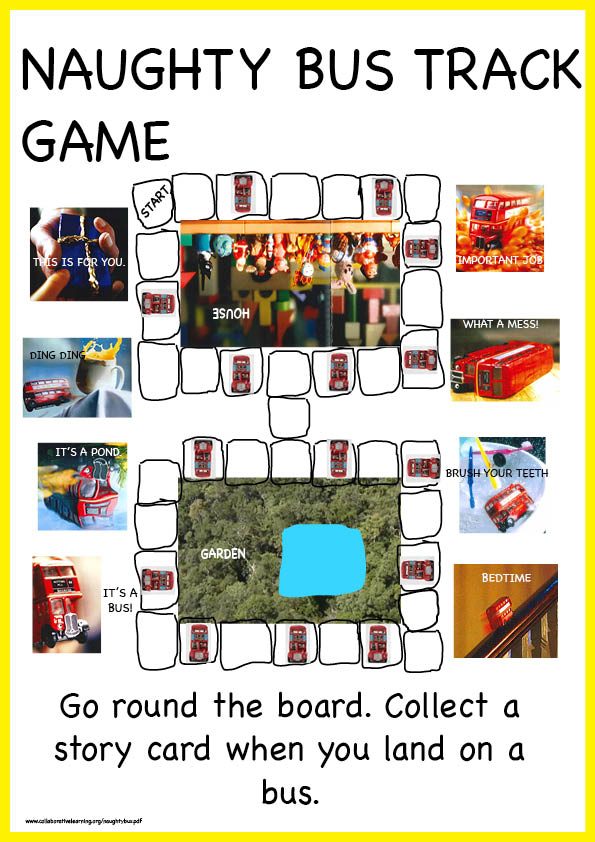
29th September 2022 Our most recent work which will appear soon is on Naughty Bus. We welcome your comments and suggestions.
|
 |
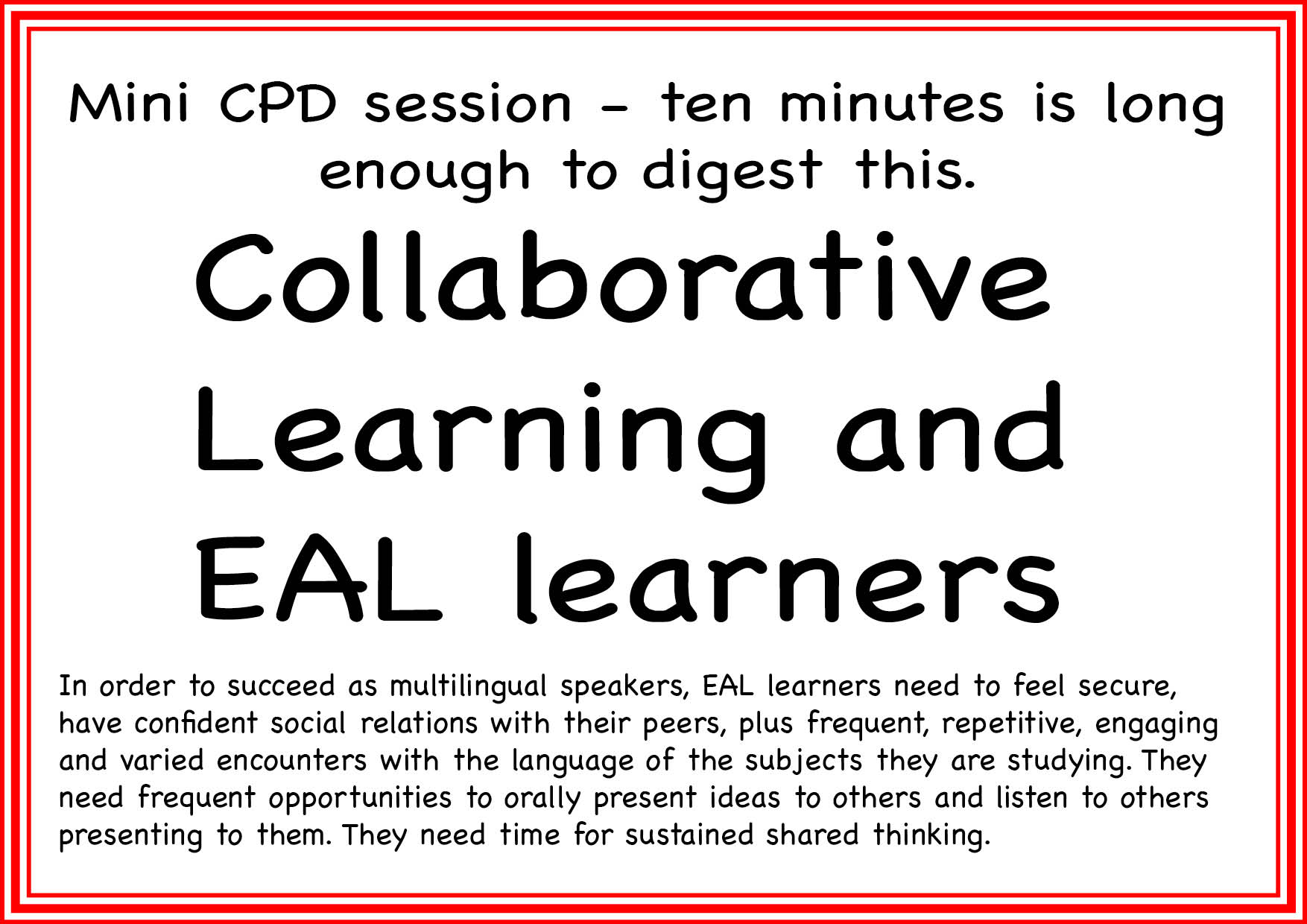
28th September 2022 Notice to colleagues from Norfolk who attended our online introduction to CLP. A link to an edited pdf version of the presentation can be found on the right.
|
 |
28th September 2022 Back to the Future? Ten years ago we posted the Partnership Teaching Videos on Vimeo. Our memories have just been jiggled by Graham Smith at the EAL Academy. Made in the 1980s; although the quality is iffy, and we all look youthful, the teaching/learning is still spot on!
|
Here are the links: Introduction partnership2 partnership3 Salmon Science lesson from Soar Valley Leicester The Introductory booklet can be found on our Research Helter Skelter. |
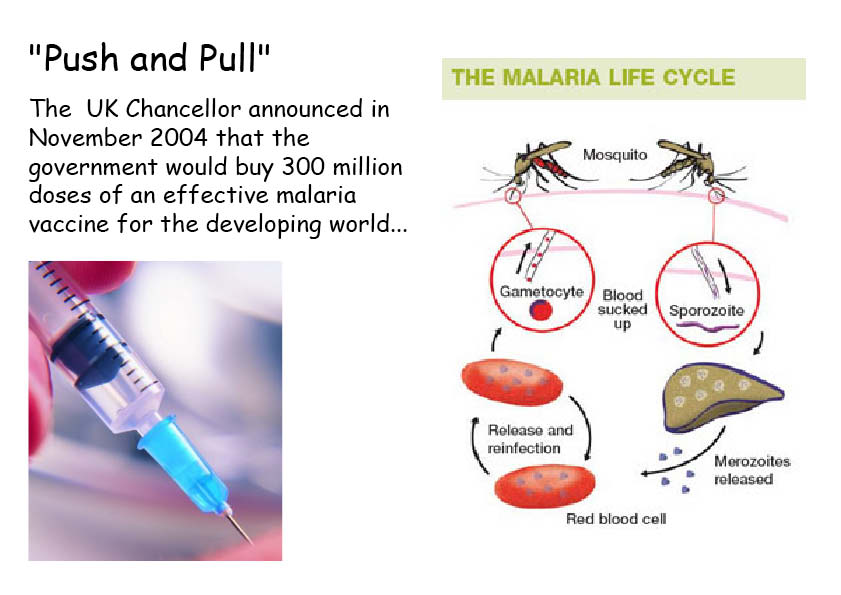
8th September 2022 An inexpensive and effective malaria vaccine has just been announced! We want to update our activity. If you would like to help us please get in contact.
|
 |
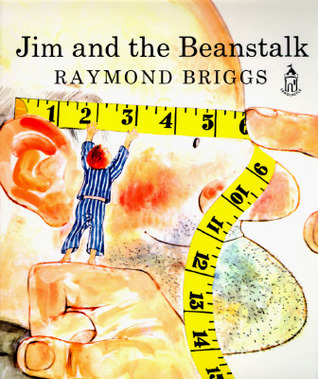
9th August 2022 So long and thank you Raymond Briggs. We have a selection of activities around his books. Our favourite and most popular on the right. |
 |
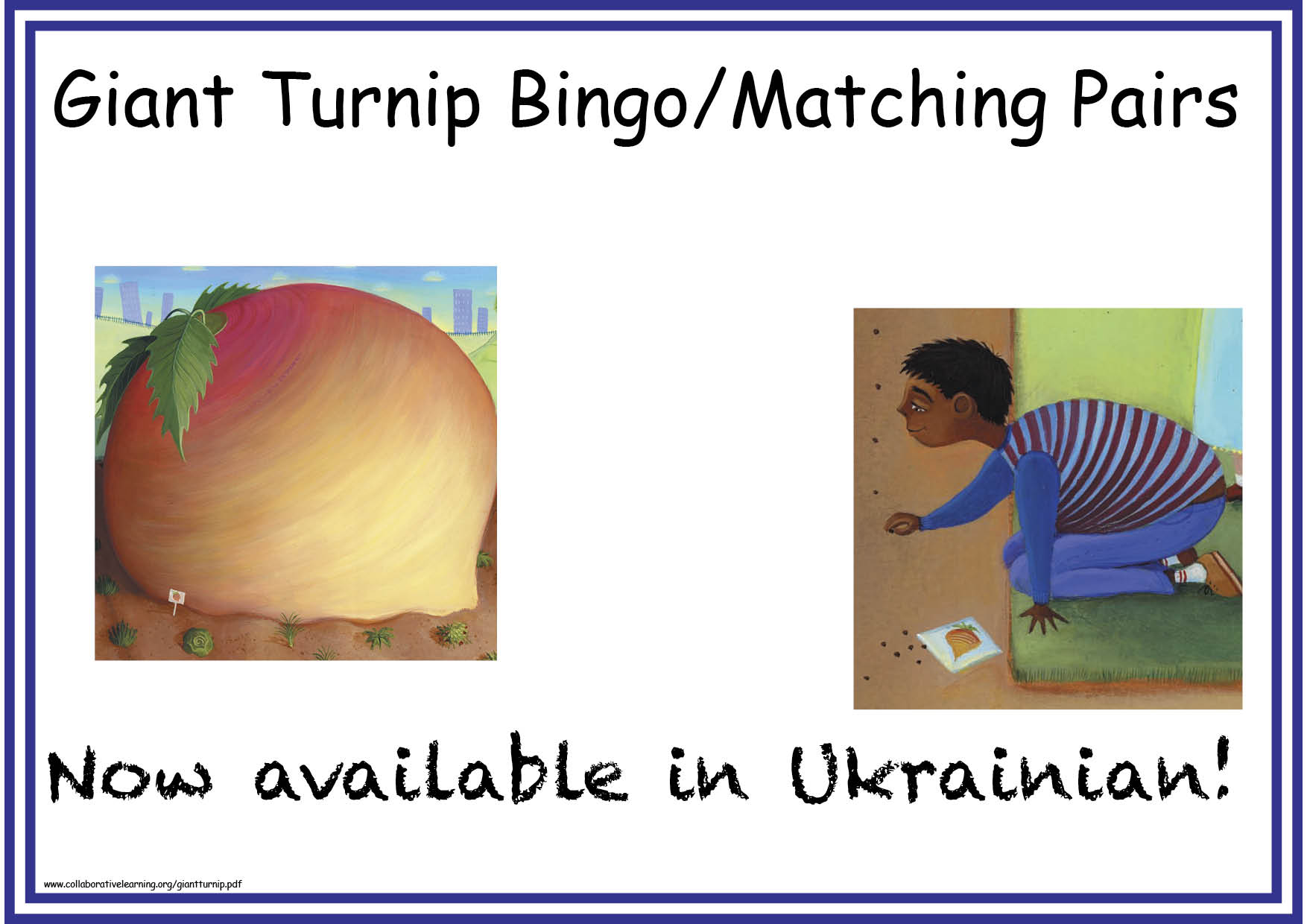
10th July 2022 Eleven years ago we started working with Mantra Lingua and produced our Giant Turnip Games. They have just published them in Ukrainian. |
 |
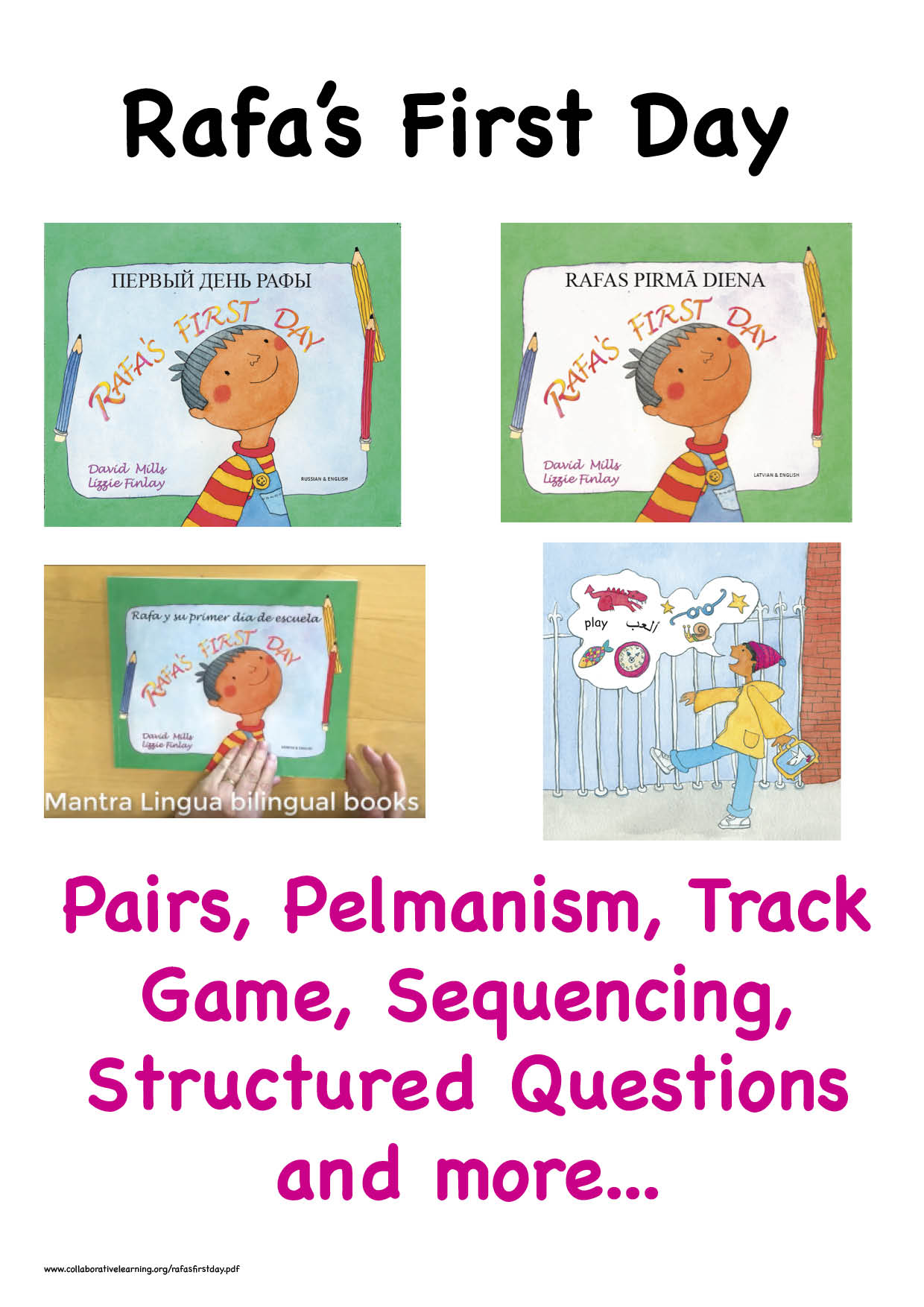
5th July 2022 Time to celebrate an amazing partnership between Rochdale EAL team and Mantra Lingua. Resources to support and enhance Rafa's First Day. If you have New Arrivals in your EYFS setting this combination provides guidance and inspiration. |
 |
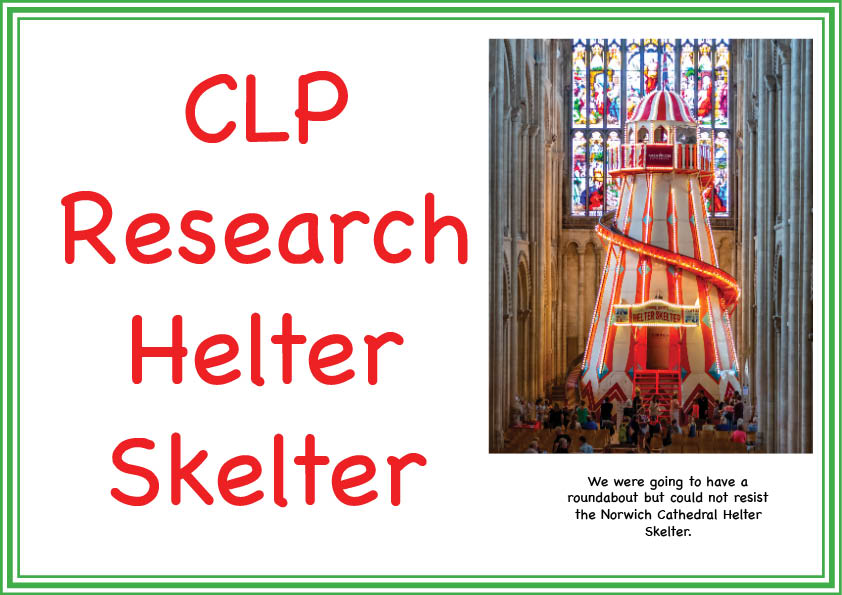
27th June 2022 The past is another country! We have just added our latest posting on our RHS with views on collaborative classrooms from 1994. |
 |
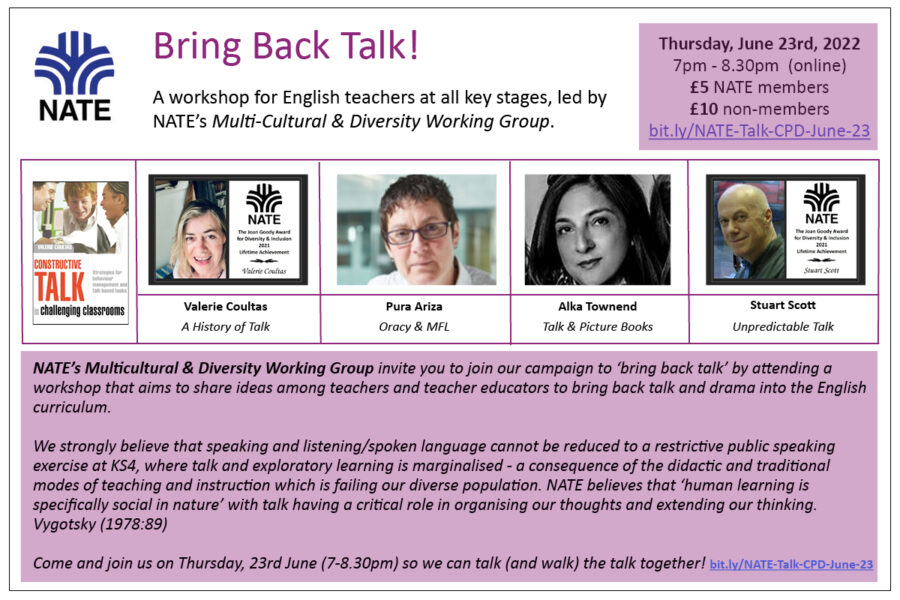
24th June 2022 NATE's Bring Back Talk Seminar. Here is a link to our follow up pages with presentations and resources. The seminar was recorded and will be available soon. |
 |
23rd June 2022 NATESOL are hosting a free presentation on COLLOCATION on 9th July. This topic is vital for all language learning at all levels. Link to their website on the right. Link to their flyer HERE!! !
|
 |
14th June 2022 Jan Garen from Wales Ape and Monkey joined us to show our work in progress at NE London NALDIC RIG on 8th June. We have now posted a dedicated link page and will update it regularly!
|
 |
13th May 2022 We enjoyed a lively and informative SATEAL Teachmeet yesterday. Thank you Kirsten and the SATEAL team.
|
|
9th April 2022 We thoroughly endorse the comments in this Guardian article. https://www.theguardian.com/commentisfree/2022/apr/05/pupils-pandemic-covid-lessons-ofsted-play More time for play and communication would help them better!
|
My pupils have been badly set back by the pandemic. ‘Catch-up’ lessons aren’t what they need |
22nd March 2022 We have now added macaques to the primates Introduce Me role card activities. You can find these new materials on our Work in Progress pages.
|
|
18th March 2022 We are working with Rochdale on poetry and words of (e)motion. Games and minibooks. You can find these new materials on our Work in Progress pages.
|
|
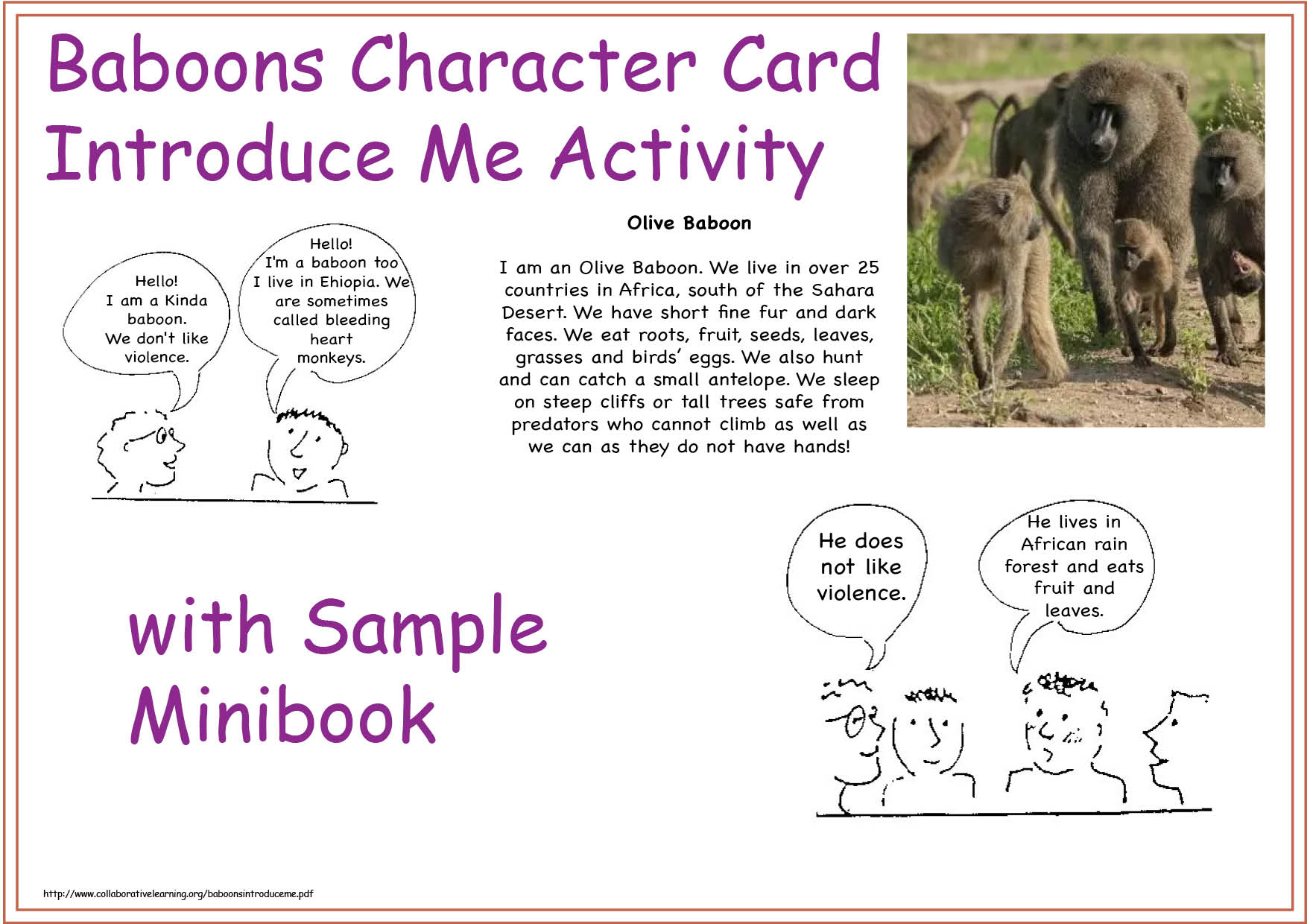
7th March 2022 Jan Garen from Wales Ape and Monkey has prepared a role play activity to introduce all the different baboons. We have included a minibook to encourage the production of more minibooks.
|
 |
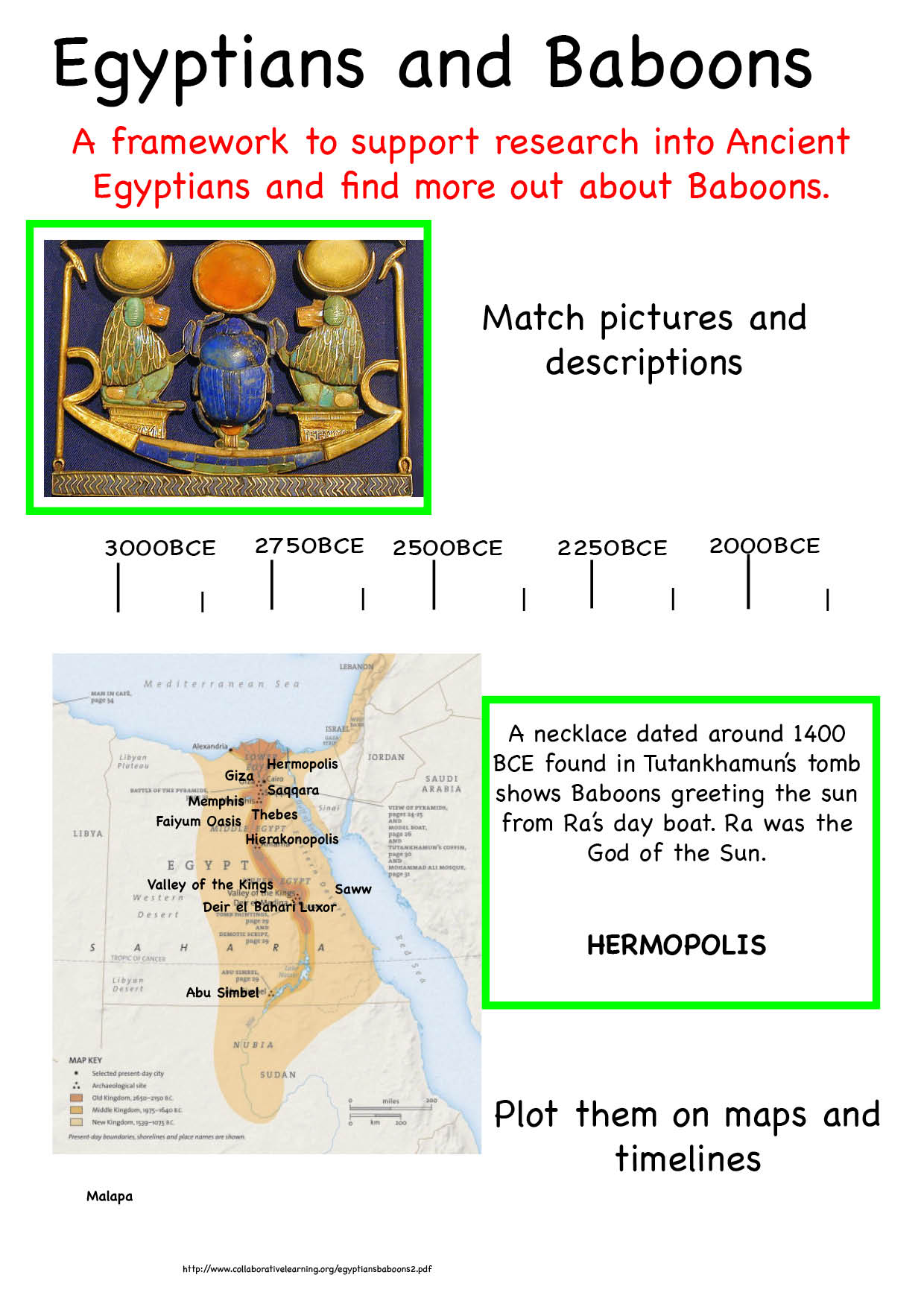
28th February 2022 New activity on Egyptians and Baboons to scaffold collaborative research in History, Geography and Science.
|
 |
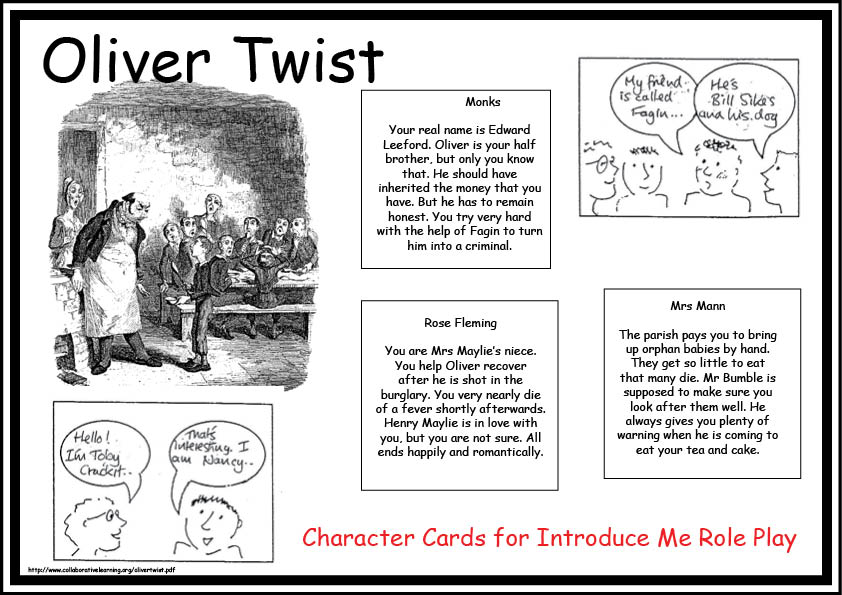
7th February 2022 Dickens' Birthday today. Born in 1812.
|
 |
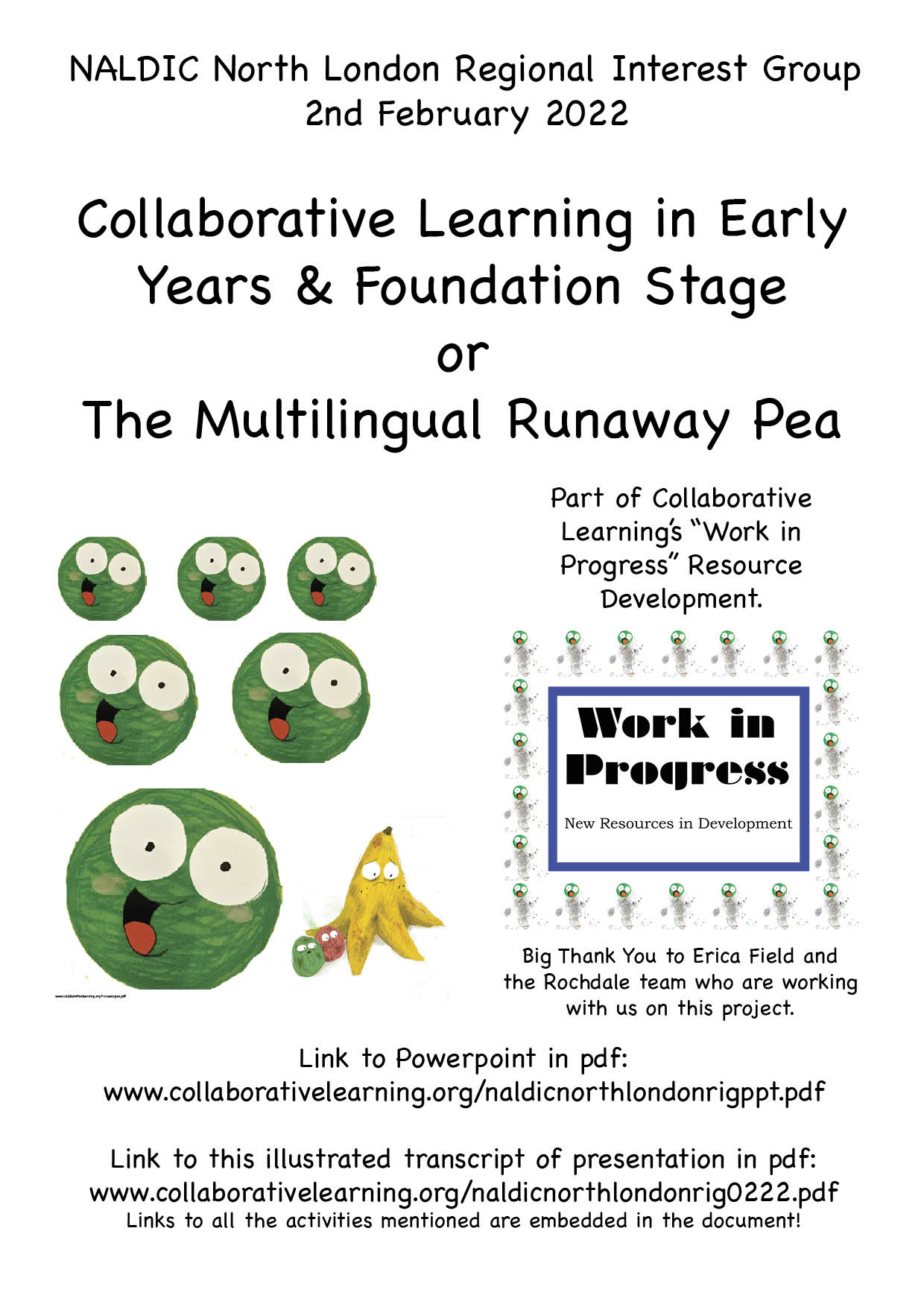
3rd February 2022 Our presentation for the NALDIC North London Regional Interest Group. We are going to group presentations on our new Professional Development page starting with our most recent.
|
 |
2nd February 2022 A day late for Chinese New Year but a story that is worth looking at and playing with all year.
|
 |
31st January 2022 Hampshire EAL team blog is always interesting to follow, but this time it features the autobiography of an Aghan refugee who left Kabul just before the Taliban arrived.
|
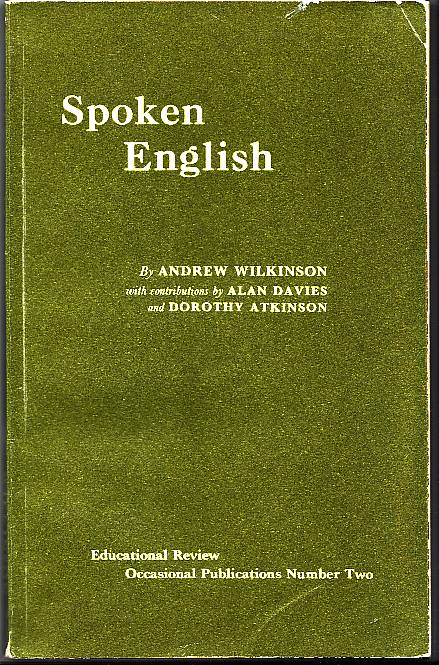
18th January 2022 Back to the future! One writer and researcher whose work has influenced us since we started out is Andrew Wilkinson. He decided that we needed a new word to describe the powerful skill of talking and listening well. He invented the word ORACY
The first chapter of this book explains his thinking.
|
 |
4th January 2022 We plan to add more languages to our Runaway Pea games; now available in French, Czech, Albanian and Spanish. Help us please with our Arabic and Bengali versions. Suggestions and corrections please!
|
|
17th December 2021 We are rethinking the purpose and direction of the project. Our activities download is increasing, but our development of new and revised activities is diminishing because we are not able to run workshops. However, for us, the process - planning together, trying out in the classroom and sharing feedback - is just as important than the resources we develop. In the same way that our activities are catalysts to scaffold talk, resource development is a stimulus to teacher cooperation and creativity. We were involved in the first wave of celebrating oracy and in the second wave that produced the National Oracy Project. We are now seeing the third wave getting under way with Voice 21. It's still good to talk; even better to talk together and create together. We welcome comments and suggestions from colleagues.
|
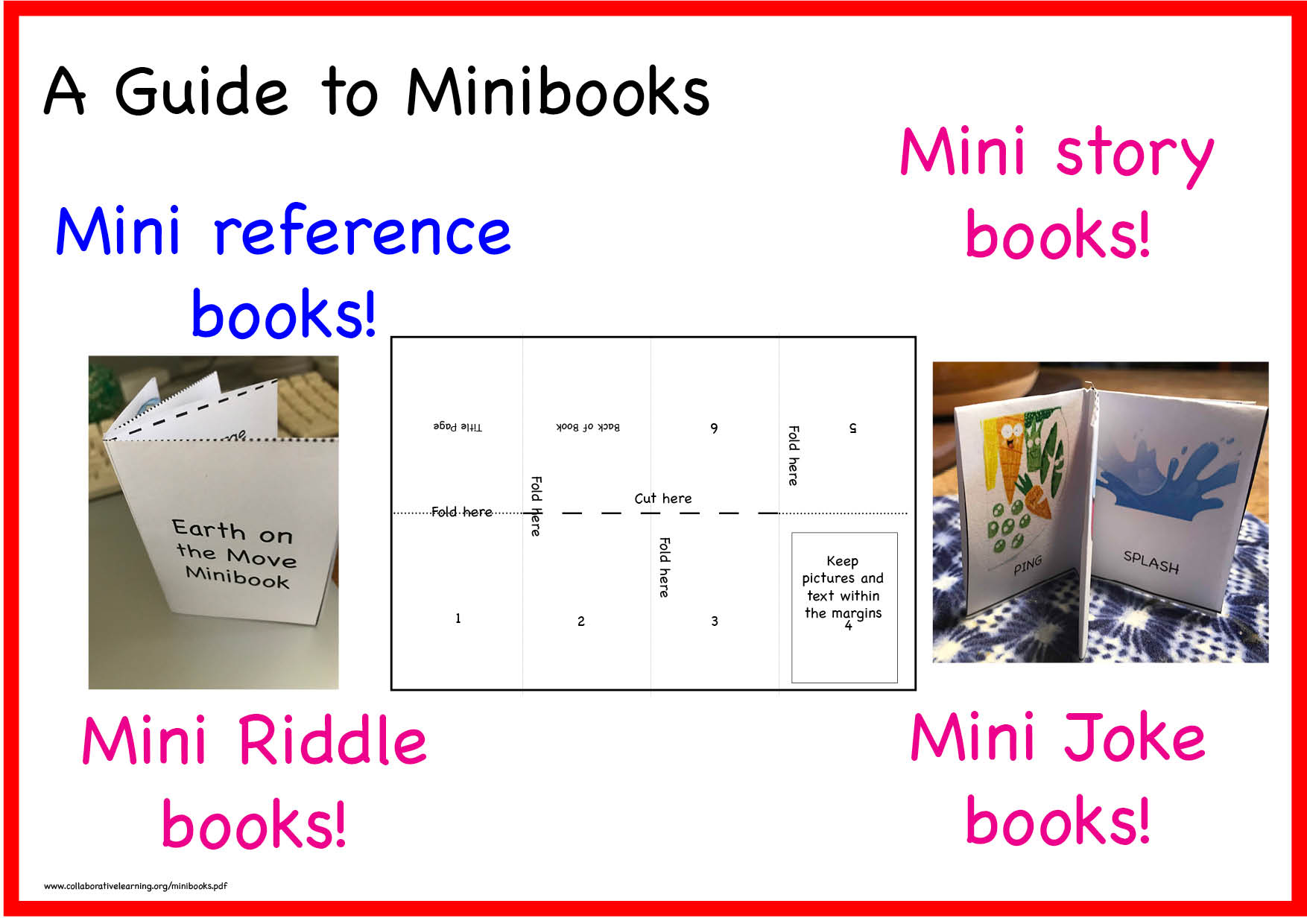
3rd December 2021 Our guide to minibooks has been very popular at our recent teachmeets, webinars and regional interest groups.
|
 |
3rd December 2021 We enjoyed a very stimulating programme at the Yorkshire and Humberside Regional Interest Group on 2nd December. It's good to see that the RIGs have been very helpful during the pandemic. We introduced some of our recent projects and resources. |
|
19th November 2021 Bradford Barnstormers have produced a visitors pack based on their Monastic Barn teaching materials.
|
 |
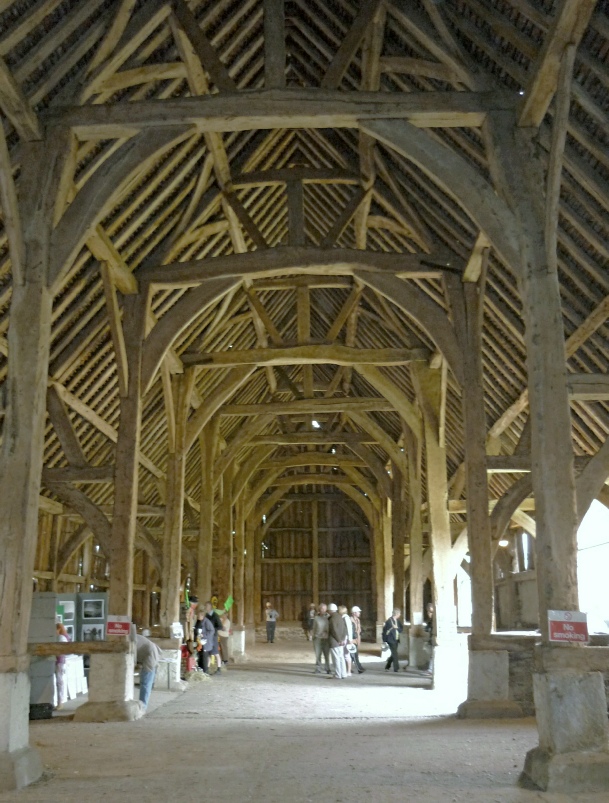
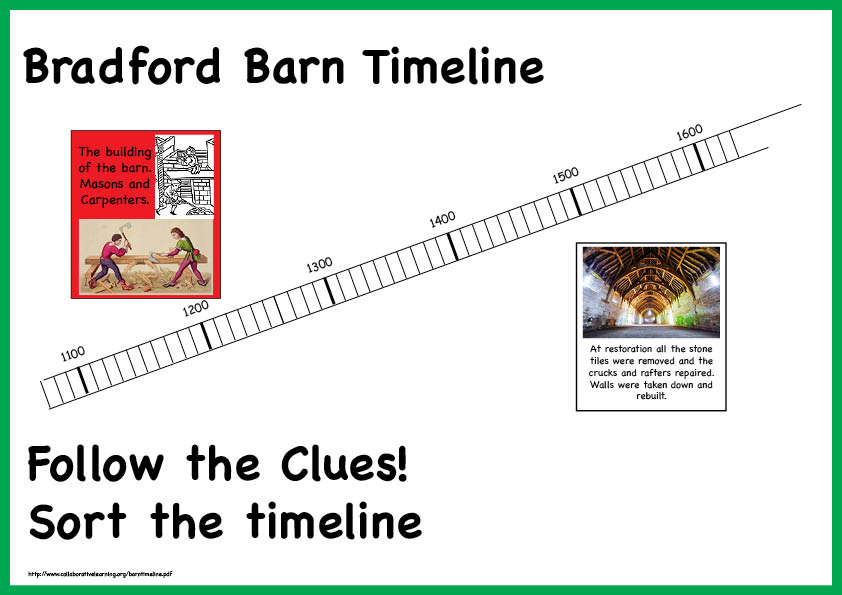
Collaborative Learning and Bradford Barnstormers (a group promoting community use of the Bradford on Avon Monastic Barn) with the support of Historic England and English Heritage have been working together to produce three teaching activities to make a visit to the barn more exciting and informative for children. The activities provide opportunities for role play, careful observation and work with chronology. Click on the right to find the activities. Even if you are too far from the barn to visit, you will find the activities an interesting introduction to medieval building methods. You might even be interested in developing activities for a building near your school. We are currently adapting the activities to support work on Guedelon the castle in France, being built in a medieval way using only medieval tools and techniques. |
|
27th October 2021 Thank you SATEAL for another lively inspiring Teachmeet We presented on resources to encourage and support parent workshops developing and sharing games and activities for picture story books.
|
 |
15th October 2021 A new link to NATESOL on our links page They ran a free online presentation last month. Connecting language across the curriculum: inclusion,differentiation and access through EAP |
|
6th October 2021 Teachers of Writing should be Teachers who write! There may be a group that meets near you. Check with the NWP website. Our group (North London) met last Saturday and produced character cards for Transformations activities. |
 |
|
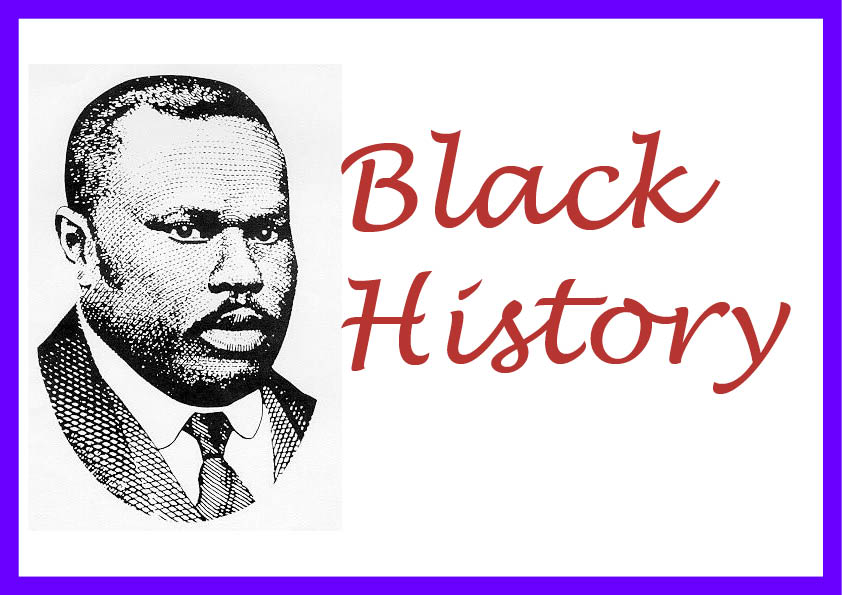
6th October 2021 Our Black History Activities have been updated.
|
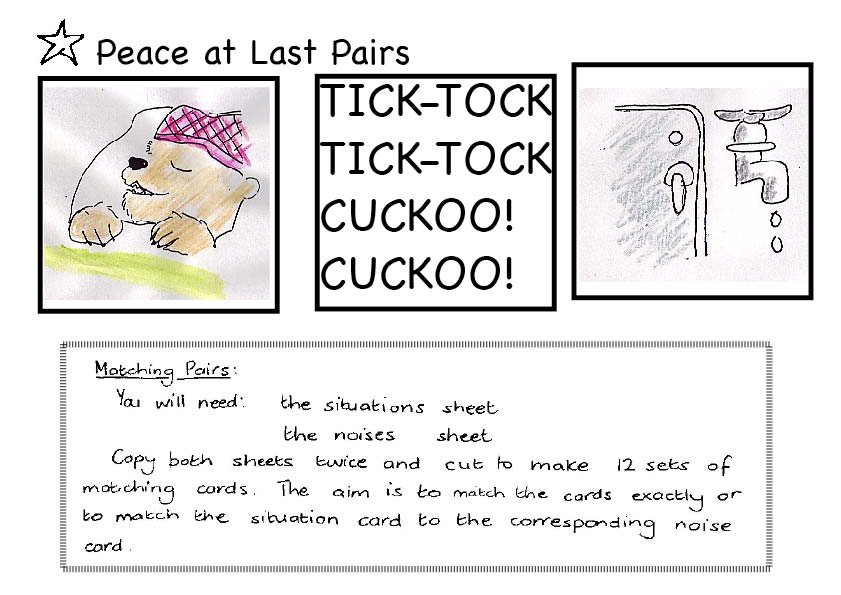
21st September 2021 Oh No! said Mr Bear! Sorry to hear of the death of Jill Murphy. Thank you for all the stories that have been brilliant for collaborative games!
|
 |
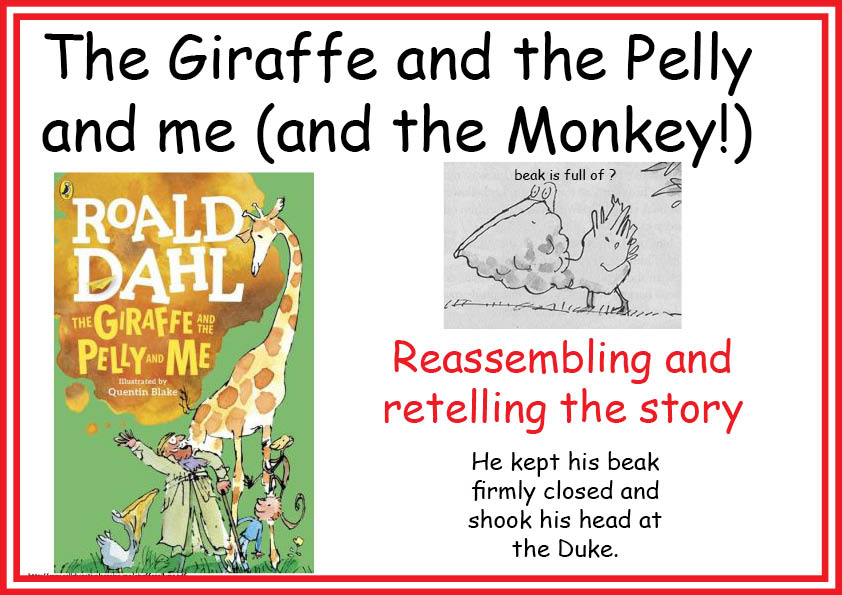
13th September 2021 For Roald Dahl day we have the Giraffe and the Pelly and Me.
|
 |
7th September 2021 Back to the future! Teachit's latest newsletter on talk (link here!) features our 2016 article on the importance of scaffolding talk using motivating activities. We featured Oliver Twist character cards, but you can find many more similar activities here in every subject. We welcome your contributions to expand and invigorate our website. We were involved in the first Oracy surge and now we are in the middle of the third. Maybe, given the unpopularity of classroom talk in top down teaching circles, we will need to be constantly going back to the future! |
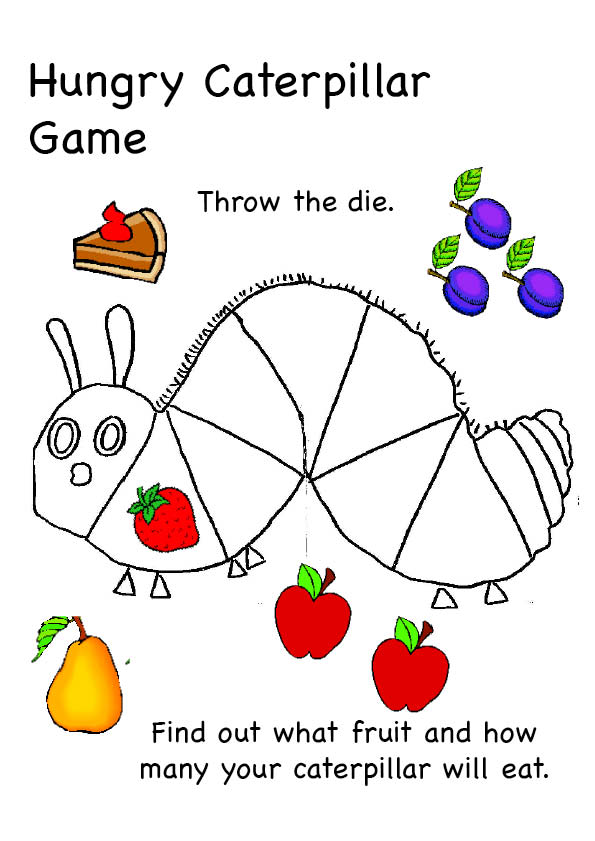
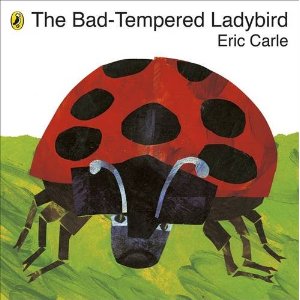
So long Eric Carle. Your books have inspired many young readers and you have inspired us to make many popular games around your stories . |
 |
 |
 |
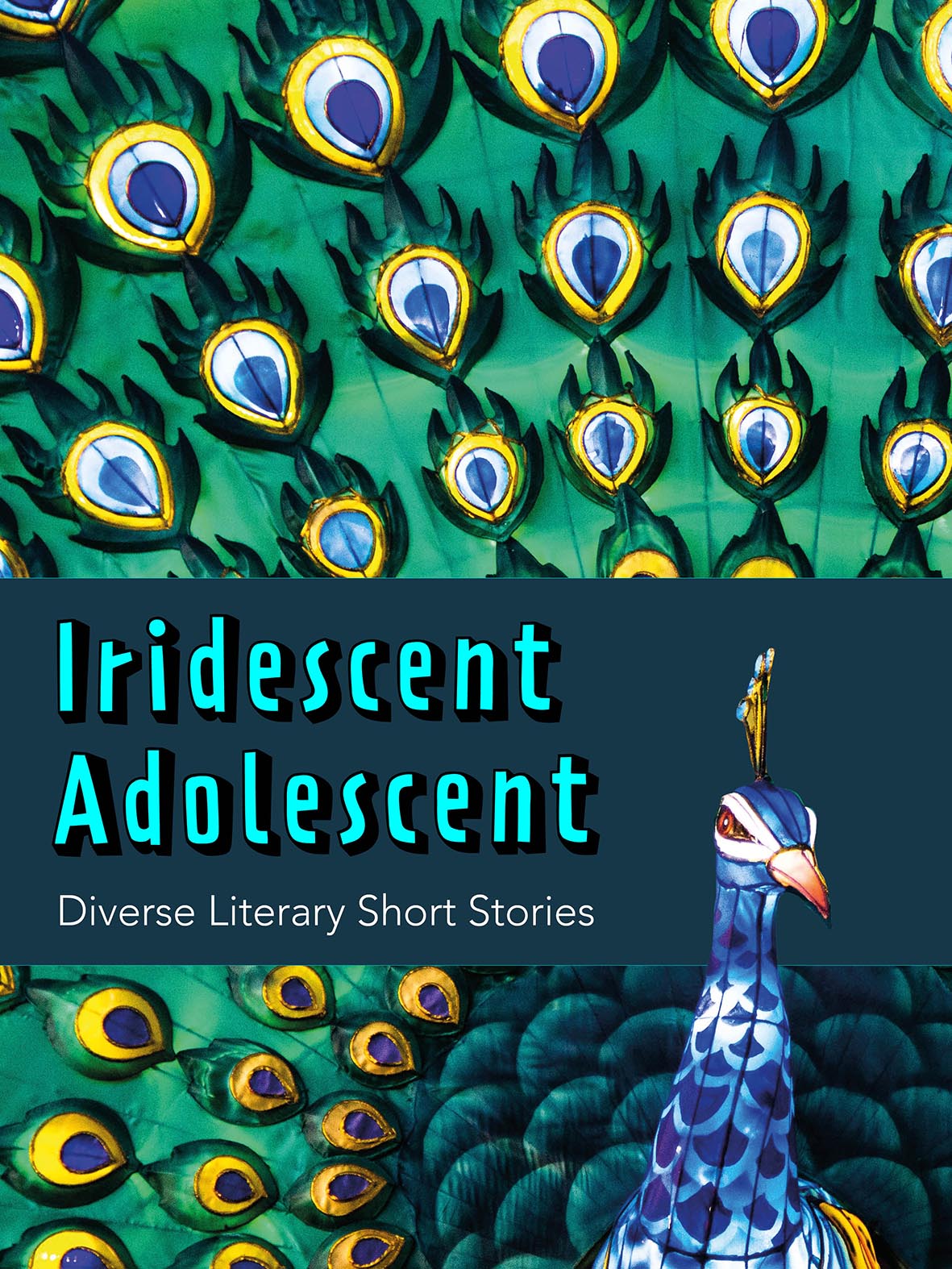
EMC published their anthology Iridescent Adolescent about a year ago. They have worked with teachers to produce group work activities around these exciting diverse short stories which are now free to download.
|
 |
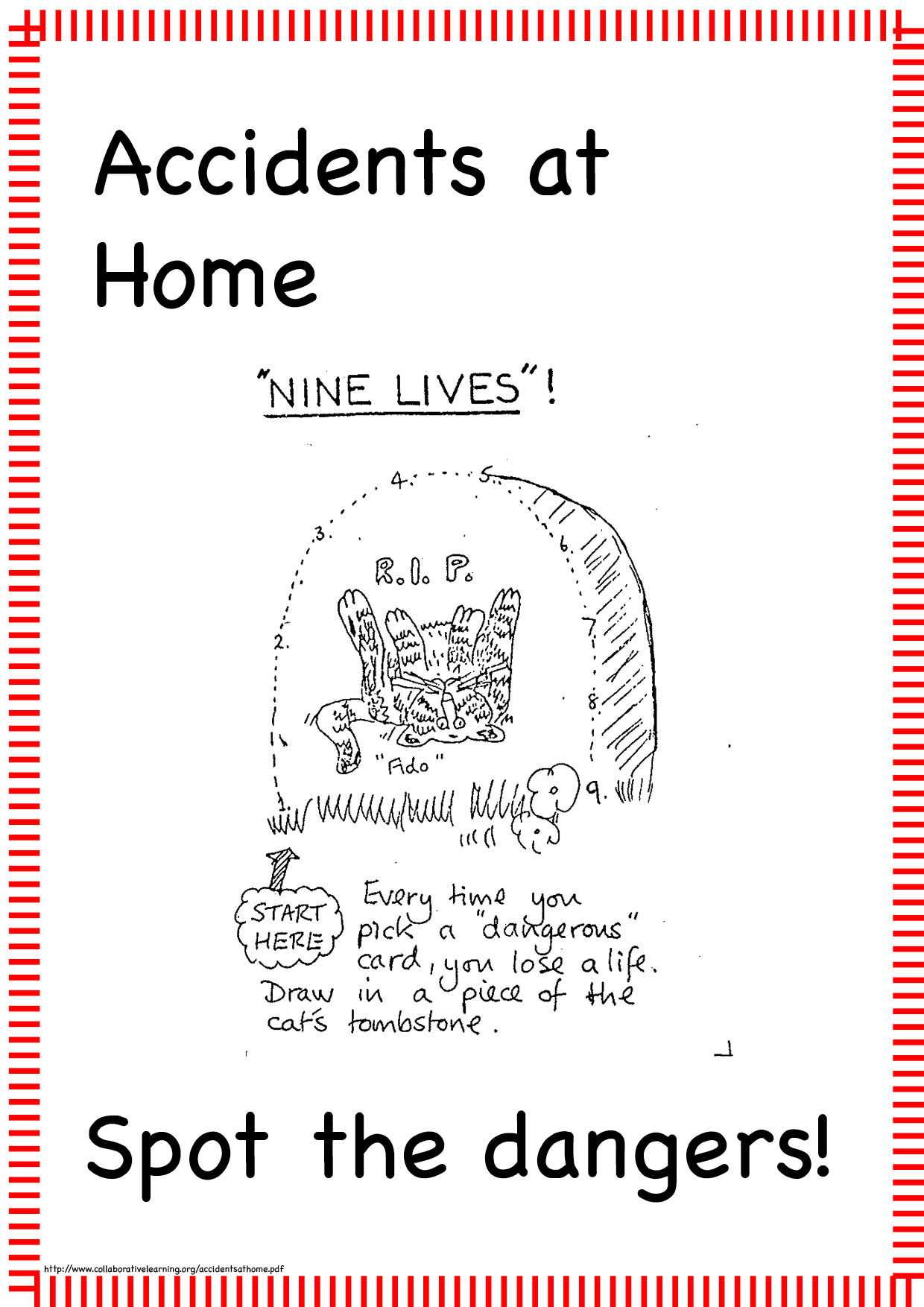
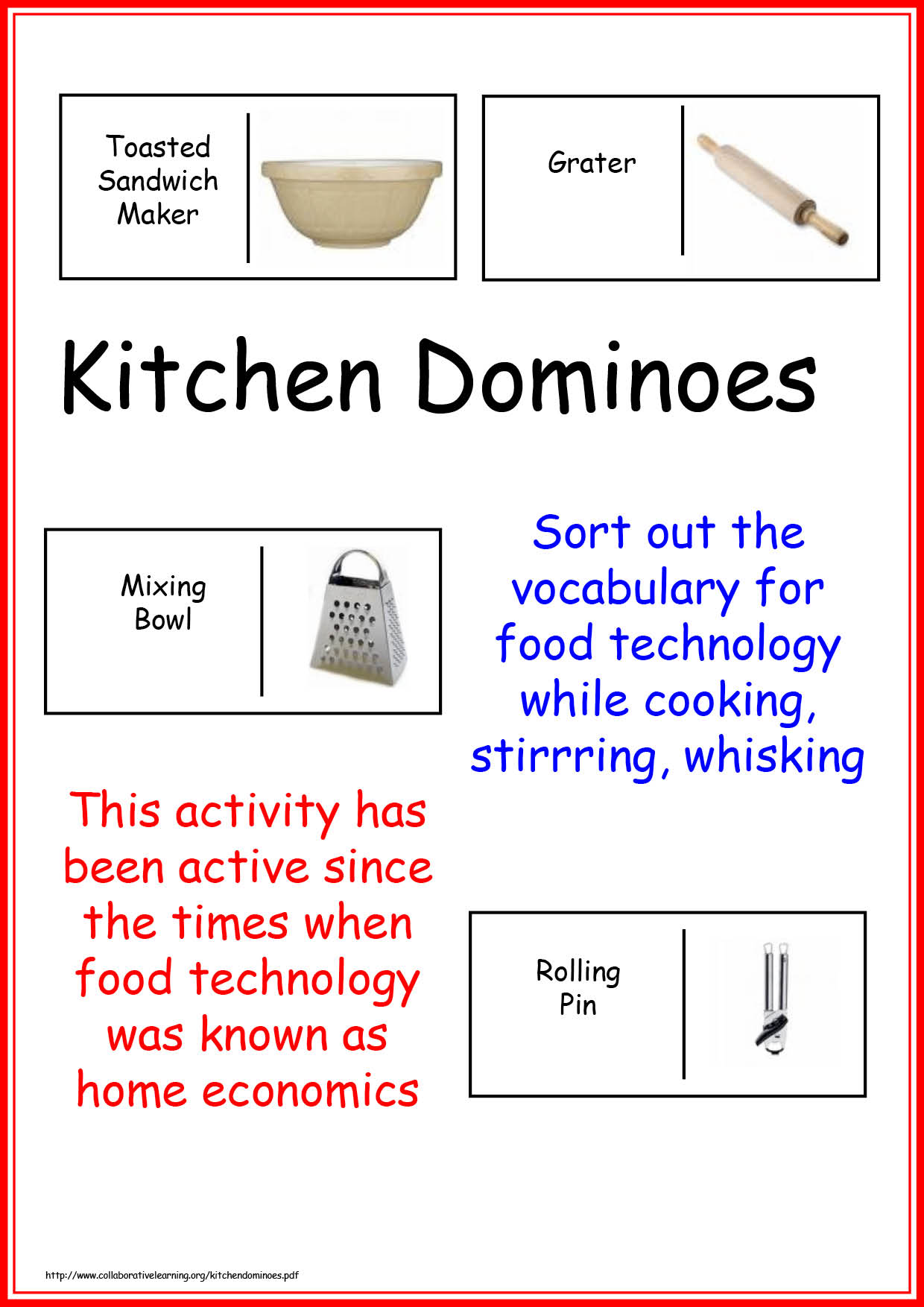
Our newest activities on line are old ones developed in the eighties and mined from our archive. Can you help us bring them them up to date?
|
 |
 |
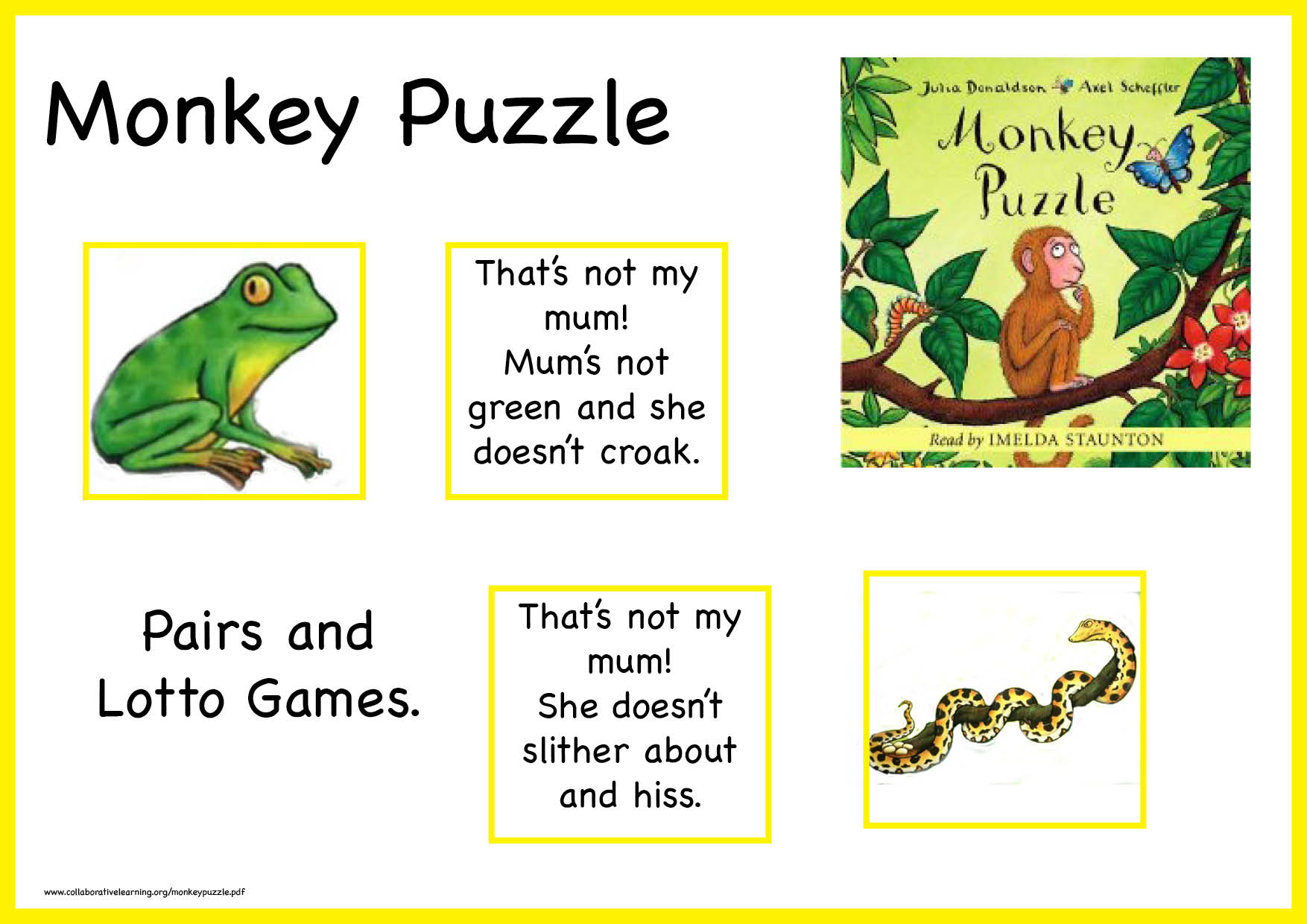
We have just added these activities to our early years webpage. Our games around books are very popular with parents. They provide many opportunities to discuss the story in different ways. |
 |
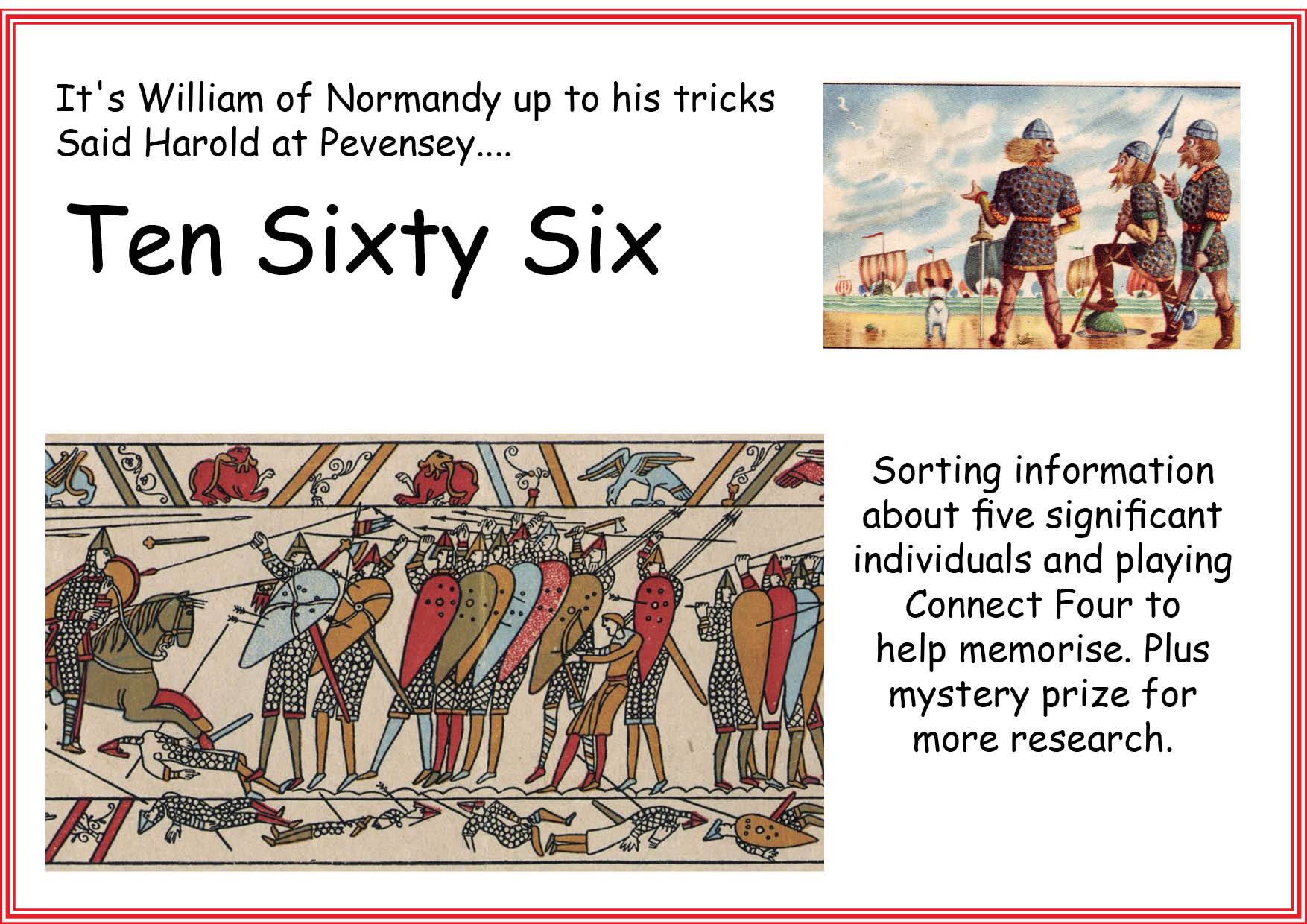
To celebrate the decision to show the Bayeux tapestry in the UK, we are offering a mystery prize for research on our 1066 activity. |
 |
Now all schools have returned, we have suspended our daily postings, but will keep these here to encourage everyone to practise quality talk inside the classroom and at home. Good to see that our activities have reached all the way to Alaska in one direction and New Zealand in the other! |
Link to our Lockdown Pages:
|
Racing to English Gordon, like a dog with a bone, on Wordwall. Give it a whirl and see whether you can produce more than Gordon. |
 |
If you are envious of our lovely peas, why not ask Renata to make you some story props for any book you love. |
 |
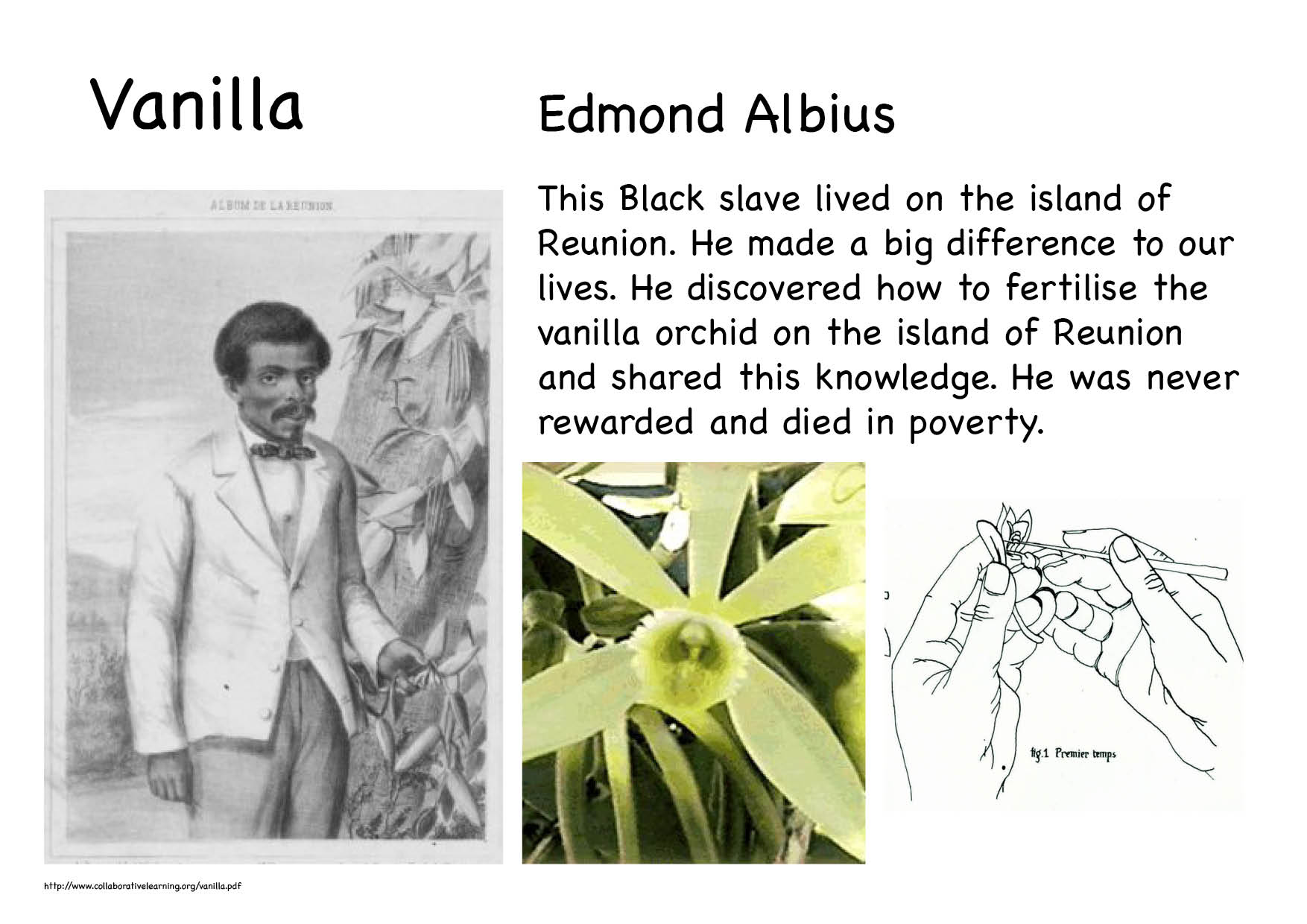
Human Rights Day: we have updated our information gap activity on Edmond Albius who created our opportunity to enjoy Vanilla, but was denied any acknowledgement nor given any reward. |
|
We're continuing work on the R game to rub along with our other virus activities and the basic activity is now online. We need ideas and pictures. If you like the idea of working with us, take a look at the Work in Progress page. |
|
We now understand there is still a chance for the bell foundry to continue. We are now seeing proposals for tulips and other unsustainable buildings rejected. Follow Spitalfields Life to keep up to date with this David and Goliath battle as well as find out very interesting things about this part of London. |
 |
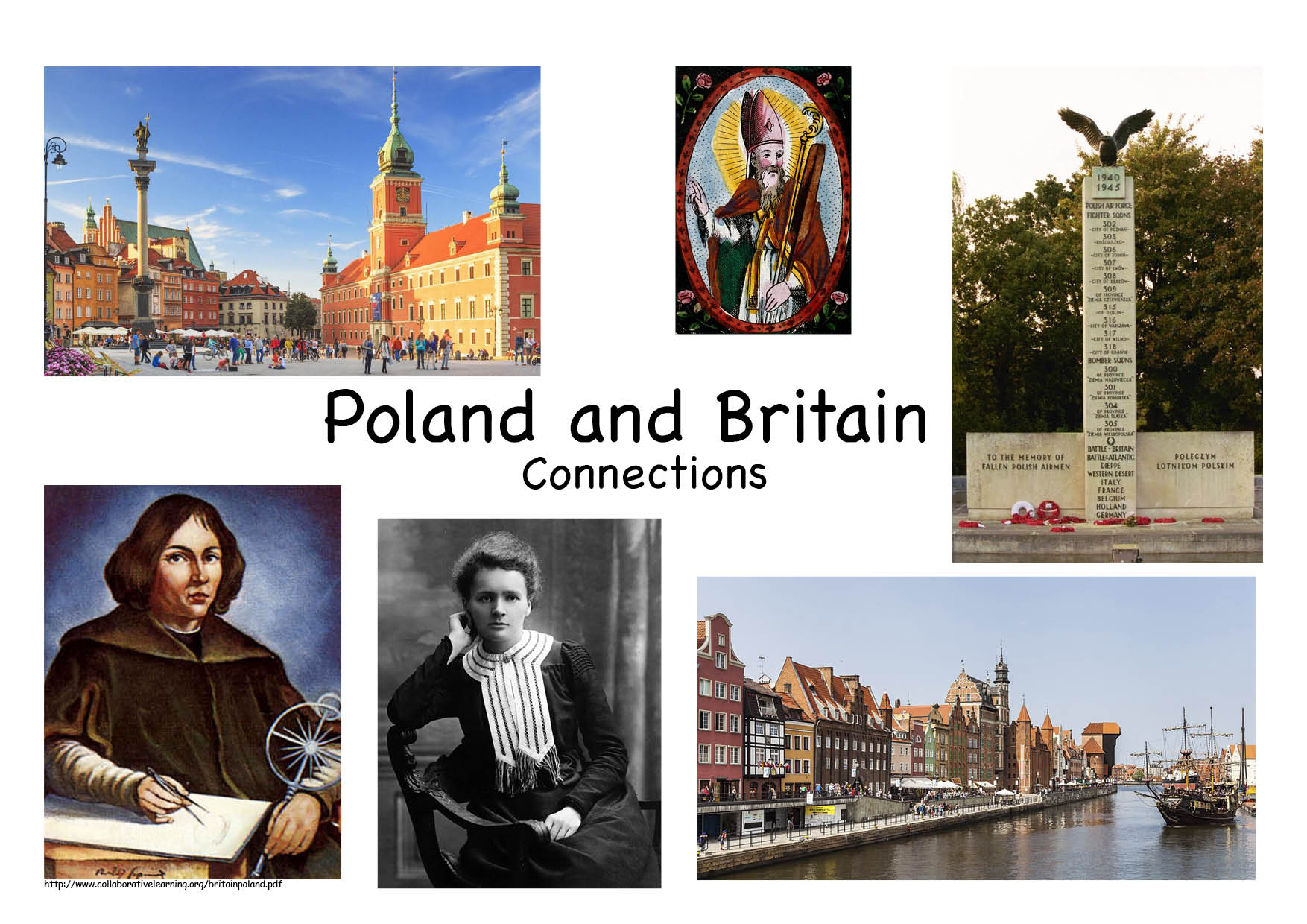
If you have Polish students in your school, please ask them to help us complete our Poland and Britain history connections activity. |
 |
Link on the right to a new video by Tim Hunkin. Two Ton School Run. Still very timely and appropriate. |
 |
New Guidance document with a host of links from the Bell Foundation. Well worth a visit. |
|
Are you feeling like an endangered species at the moment? Here's an activity which will put this in perspective and provide some salutary lessons. |
|
Mantra has written a new introduction to their publications. Over 550 books in our Free eLibrary in English with French, Spanish, German, Romanian, Polish, Mandarin, Arabic… When schools were closed, Mantra Lingua offered free access to their dual language ebook library. The books can be used in building English and MFL skills. Also, in homes where English is not the first language, parents and all siblings can sharpen their English reading and speaking skills. Please support them now. “We used the ebooks to promote literacy and foster a love of reading,” Erica Field, EMA Teaching and Learning Advisor
|
|
We were very impressed and would strongly endorse Robin Alexander's evidence to the All Party Group on Oracy. Here is a youtube link to the meeting. |
|
|
We would encourage you again to visit Nrich for groupworthy, accessible challenging maths activities. Take a look at their COVID page.
|
|
Excellent informative new website from Warwick Mansell and Ann McGauran: We aim to put under the microscope the endless waves of reforms which have hit England’s schools in recent years. We will seek to hold policymakers and those with power to account for goings-on at ground level, as we dig around in the undergrowth of schools reform.
|
|
New information gap activity on Mae Jemison from Steve Cooke.
|
We have put back our link to the Schools History Project and encourage you to take a look at their Essay Competition.
|
|
We have for the interim opened our Early Years resources so you don't need to register, but if you return a lot please do so. You can access them directly either from the main activities menu or from the picture on the left. Many are good for parents, carers and children exploring familiar books.
|
|
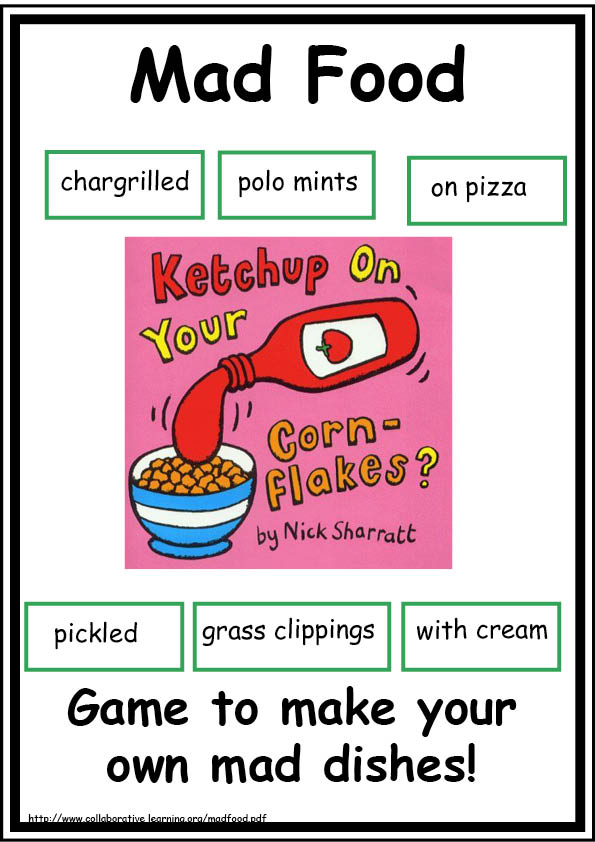
We updated our games and activities for teachers playing with parents playing with children to take to SATEAL conference . . Our most recent livened up resource is Mad Food with a picture version to play. P.S. Early Years resources can be accessed at the moment without registering. All the activities are free as they have always been and always will be.
|
|
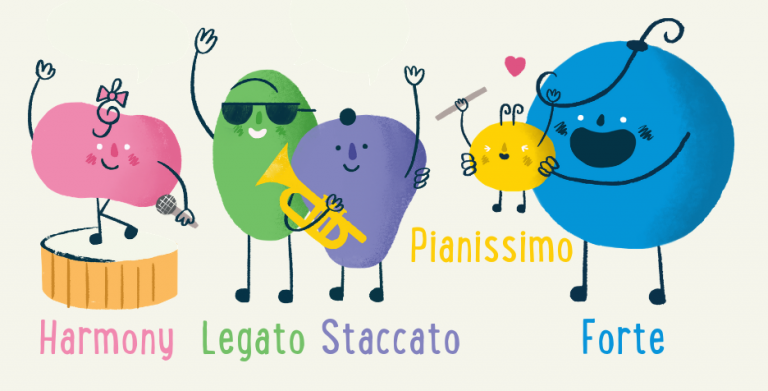
Meet the Musical Dots! Lively songs with helpful lyrics. Chart quality! Concerned that quite often the tunes that children are tapping and jiggling to often have unsavoury and downright sleazy lyrics, this group have produced some brilliant tunes to encourage fun and collaboration for the rituals of the school day.
|
NFER report Teacher Autonomy and Job Satisfaction? This recent report by NFER is an important read. 38 per cent of teachers say that they have 'a little' or 'no' influence over their professional development goals Teachers are 16 percentage points less likely than similar professionals to report having 'a lot' of influence over how they do their job
|
Teacher autonomy is strongly associated with improved job satisfaction and a greater intention to stay in teaching
To us it seems obvious, but at least here is a stick to beat those who undermine autonomy.
|
|
Here is a link to the most recent issue of Innovate. Link on the left. We are very happy to support Innovate because it is a return to the movement that started us off in the 80s: teachers as researchers and exploring the creativity and empowerment of collaboration. Very refreshing in this current climate of constant measurement and undermining autonomy. We believe that teachers are more than twice as creative when they work together. The page is a temporary one but we hope we will be providing an introduction and more back numbers of the journal.
|
|
Gordon has done it again ..and again!! Another collection of You Tube talks full of good sense and useful suggestions. Link to his short presentations that clarify many of the why's and how's of collaborative learning.
|
|
We have tidied up A Squash and a Squeeze which is one of our most popular activities so please suggest new games for this book.
|
|
We are delighted to have been working with Teachit for their first twenty years! Here's to the next twenty!
|
 |
More evolutionary support for Collaborative Learning We believe that teachers are more creative and develop more engaging and exciting resources when they plan and work collaboratively inside and outside the classroom.
|
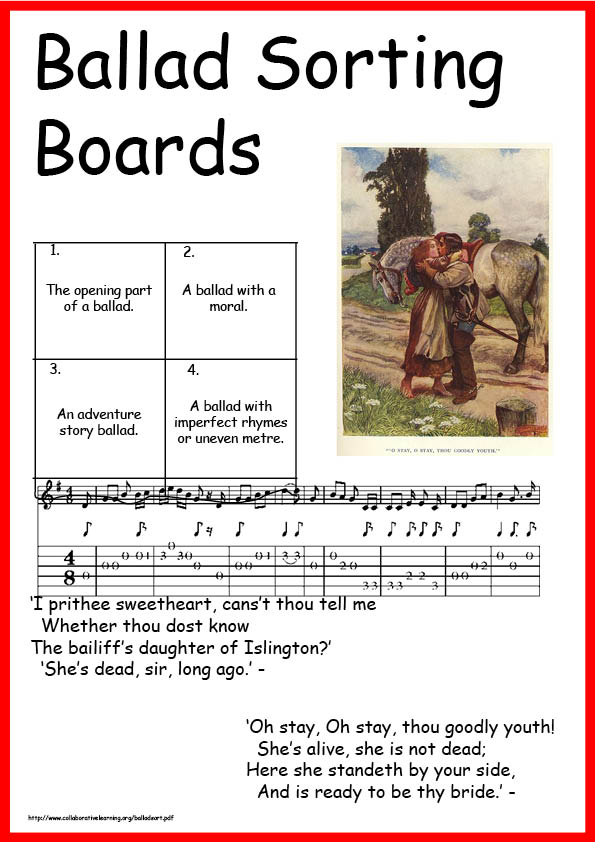 |
We have been updating our poetry sorting boards. Take a look at our ballad activity and suggest additions. |
|
We really like the new oral and visual presentation from Mantra Lingua! Click on the heffalump to take a look!
|
|
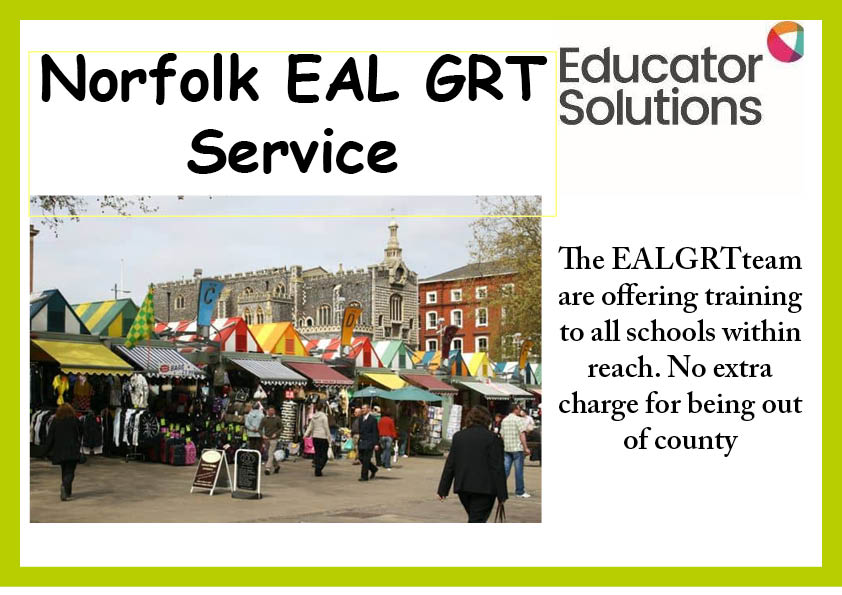
We have added a link to the Norfolk EAL team on our links page. Find out about their lively programme of courses and events.
|
|
Gordon Ward from Racing to English has just updated his Solar System Connect Four Game. Take a look at his website for more collaborative games.
|
|
The National Writing Project has changed its web address. They have gone weebly. Contact them to find out about a group near you. Writing together can be as inspiring as developing collaborative activities together!
|
|
A big thank you to colleagues that have publicised the project on social media! Our most recent EYFS activity on the left! Hang on to your copy of this book - it's becoming a rarity.
|
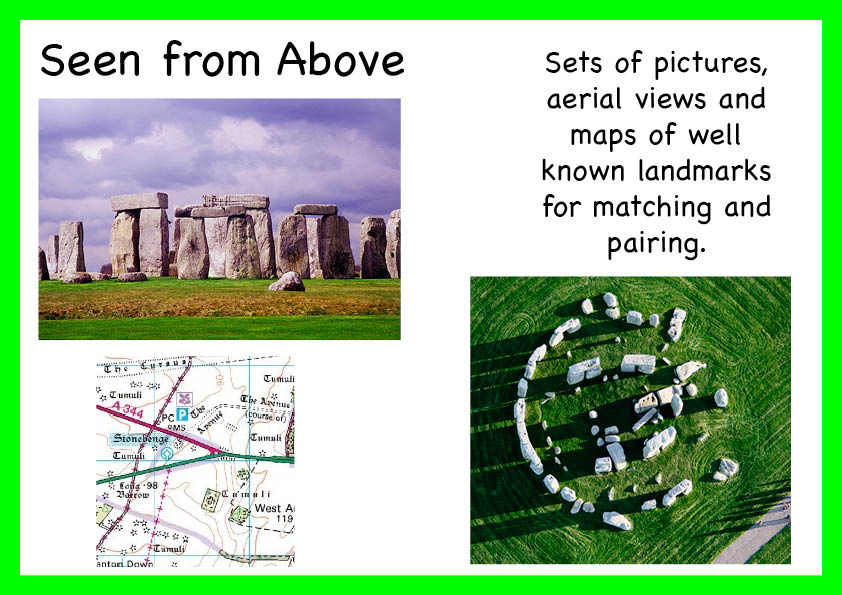
Take a look at our most recent Geography activity. Not a word in it, but likely to scaffold lots of purposeful talk. |
 |
We wrote an article about role play for Caroline's newsletter. We used our KS2 activity on trade goods from the East India Company. You can role play spices and textile and even angels, reals and Spanish dollars. |
 |
Would you like to get beyond technical talks and help us develop new activities that empower pupils. Take a look at our new activity on the British Empire which is part of our Work in Progress. It links closely to the history work undertaken by the Runnymede Trust. |
|
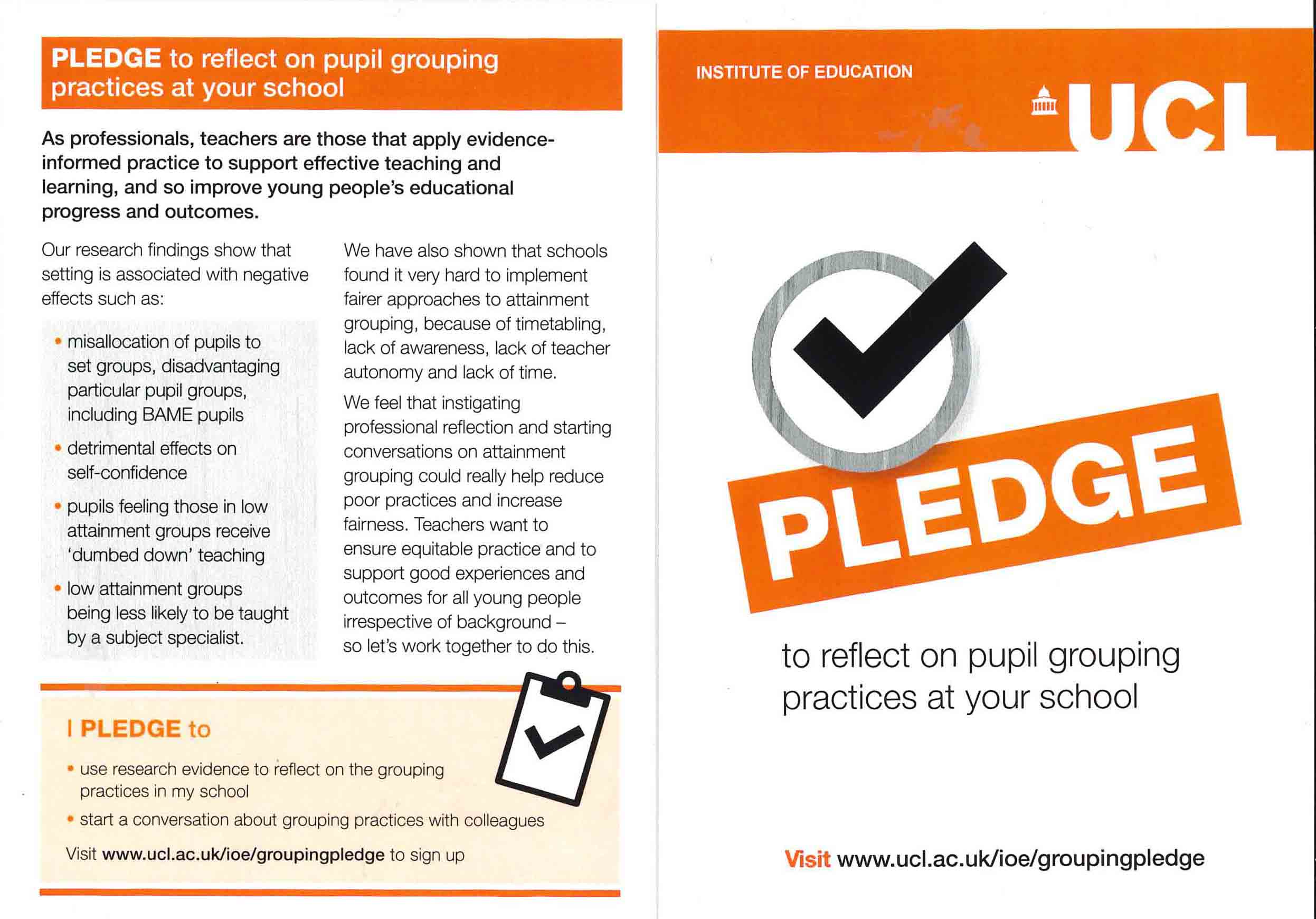
Can we encourage you to sign the pledge? 'Best Practice in Grouping Students' is a research project funded by the Education Endowment Foundation and conducted by researchers at UCL and Queen's University Belfast, which ran from 2014-2018. It investigated which methods of grouping secondary school students are most effective in improving their educational engagement and attainment with particular attention to improving the performance of students from disadvantaged backgrounds. The project was independently evaluated by the National Foundation for Educational Research. Collaborative activities thrive in mixed attainment classrooms. |
 |
We are updating our Literacy activities and adding more. Please check our Literacy Page from time to time. We'll also wake up our Twitter Bird (blue footed booby) and flag up new activities. |
|
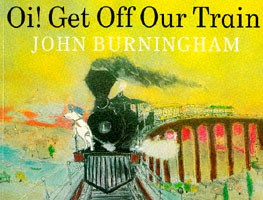
We have just heard of the death of John Burningham. We would like to thank him for all his books that have promoted meaningful conversations between children in nursery and primary settings. We hope they will continue to provoke and inspire for many more years to come. We will be producing more collaborative activities around them.
|
|
Collaborative Learning and Kate Moorse have been running workshops for Humanities Coordinators in many London boroughs for many years. Cuts to LA budgets have meant that these workshops are now few and far between, so we have set up a webpage with links to useful documentation which you can access even if your authority can no longer fund workshops or has actually never funded them. We'll try to keep it up to date.You can find it here! Please persuade your head to let you join the History and Geography Associations for the best and cheapest CPD. Links on our links page.
|
We have just updated our Mad Food activity since our Rascally Cake work will match it beautifully. |
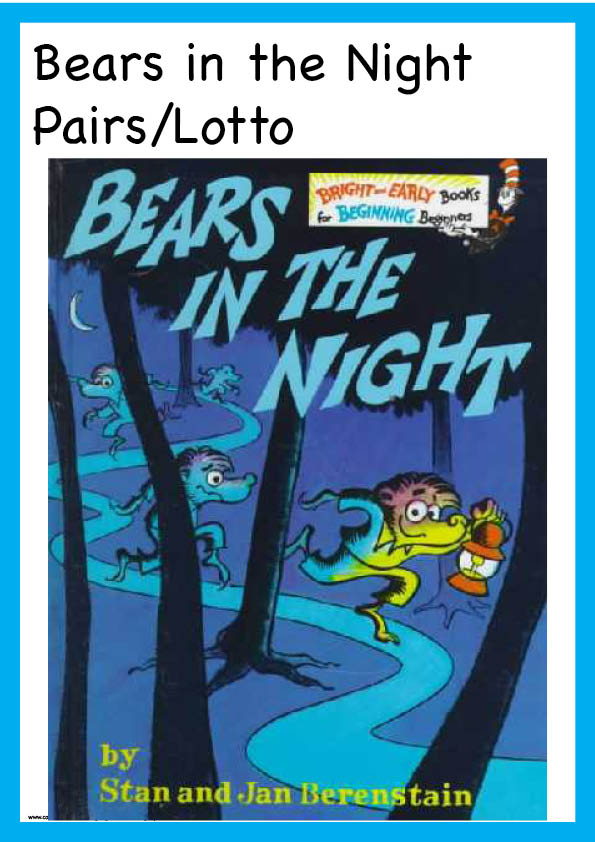
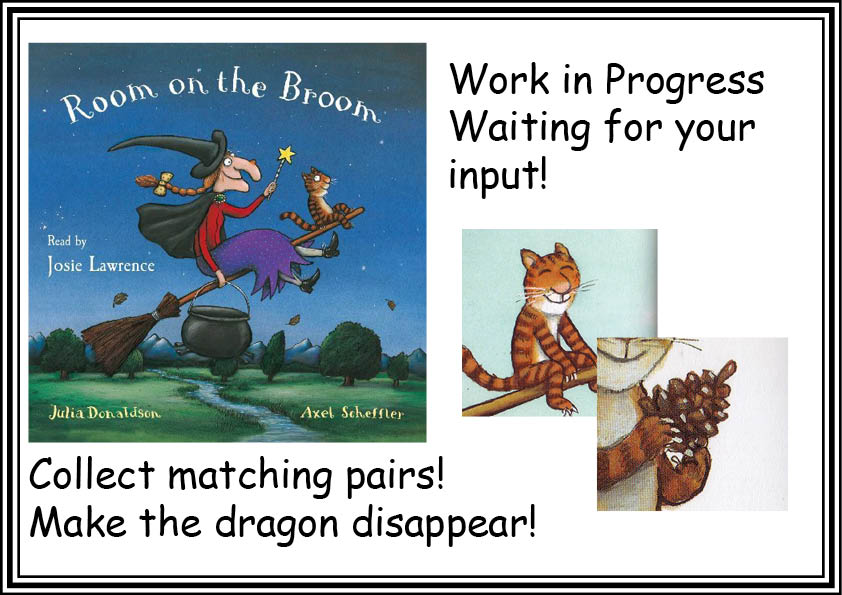
Inspired by Hallowe'en and the current preoccupation with increasing vocabulary without too much attention to curriculum content, we are adding a contextual language activity to each of our early years activities around popular storybooks. These activities use pictures from the books so for copyright reasons are not accessible from our main website. If you want access you must register your school with us and we will send them by email in pdf. If you want to join us in developing them we can also send you editable versions in Adobe Creative Suite. This software usually costs an arm and a leg, but Adobe do offer hefty education discounts. Our first activity is Room on the Broom. Whooooosh! Our next one is Rascally Cake. We are developing more at our next workshop.
|
|
Erica Field and her colleagues in Rochdale have worked with pupils on what it feels like to be "new". How could your classmates help you? She tells us: "I've had the privilege to work with an amazing group of young people, who are answering these questions." 'Our Story' shares the collective experiences of a number of international new arrivals and asylum seekers, most of whom arrived in KS2. Their short animation is designed to be used in school with a class before the new arrival starts. "If we can help make things just a bit better for the new person and the class that would be amazing!" says Neet-Kaur. The young people involved worked with M6 Theatre and Kilogramme Animation Studio to explore their own feelings, write and record a shared script and consult on every stage of the animation. They had the final say about everything.They have also produced an activity pack that class teachers can dip into if they want to do a little more than just show the animation and have a chat about it. |
'Our Story' |
We have just added two lively and useful sites to our updated links page: Better Bilingual based in Bristol and
|
 |
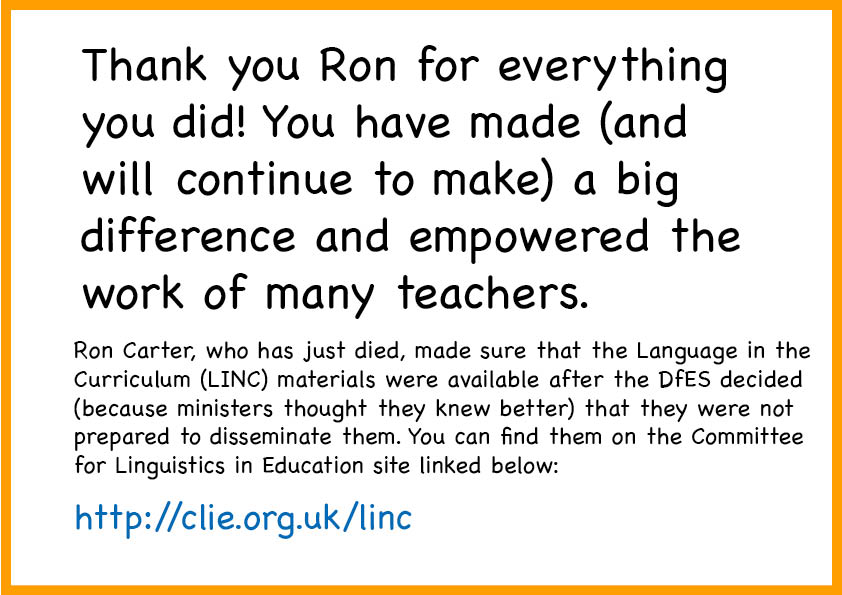
We are very sorry to hear of the death of Ron Carter. He has modestly and thoroughly supported work on the value and impact of talk in classrooms for many years. We cannot count how many inspiring sessions he has led. We will ensure that his ideas and resources will be available for teachers in the future. The link to LINC is on the right! Link to Obituary:
|
 |
 |
. |
| We have received the final copy of Race Equality Teaching previously known as Multicultural Teaching. It is a glorious compendium of articles from all the issues since 1982. Some good news: you can reach all the issues on open access on the IOE Press archive. Click on the right! | 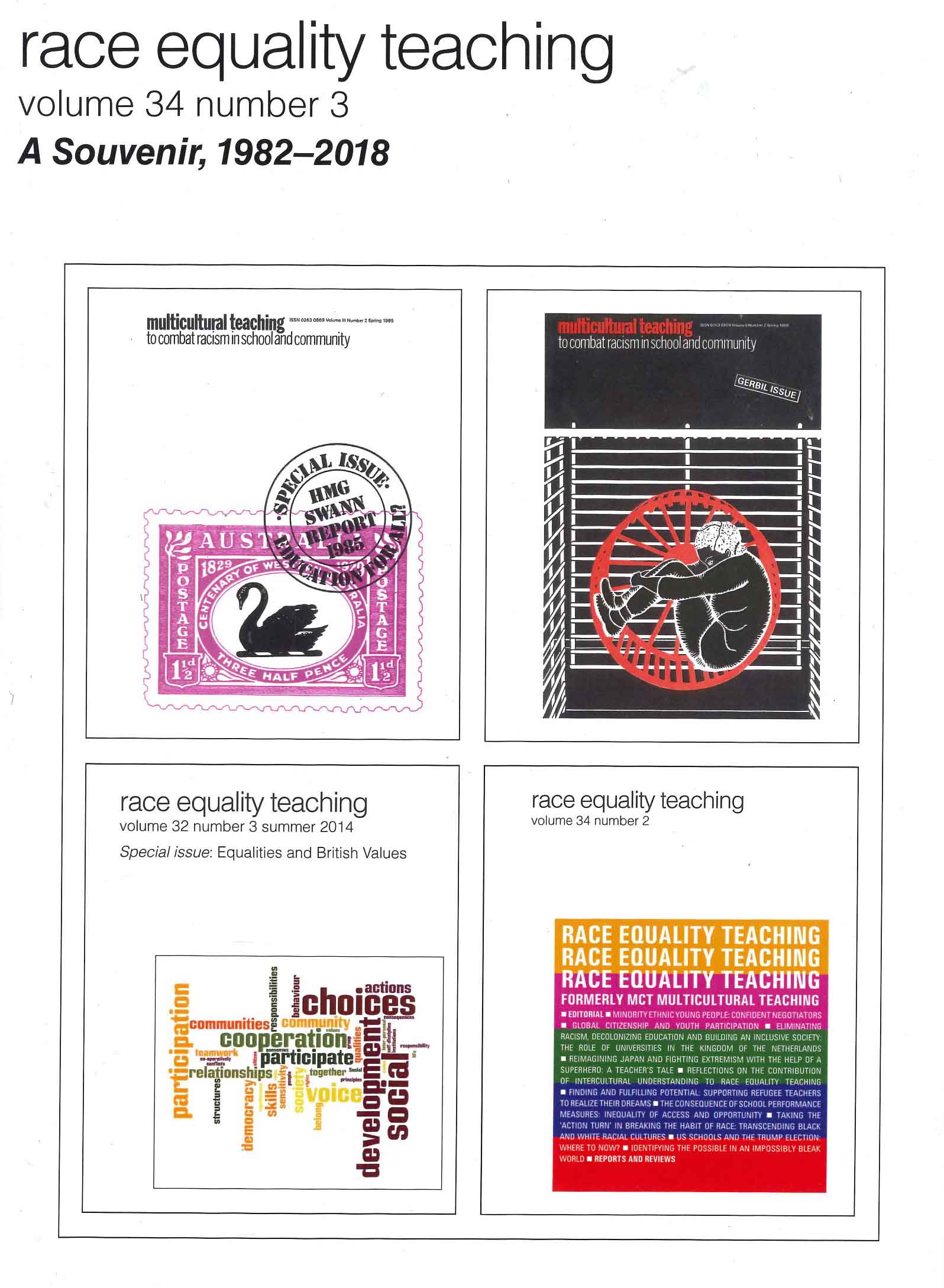 |
| The SATS are still with us and if anything more pernicious than ever; poking roots into every bit of the curriculum and drawing off any creativity that still remains. This poem by Alan Gibbons was published by the Anti-SATS alliance and offers hope and humour. | 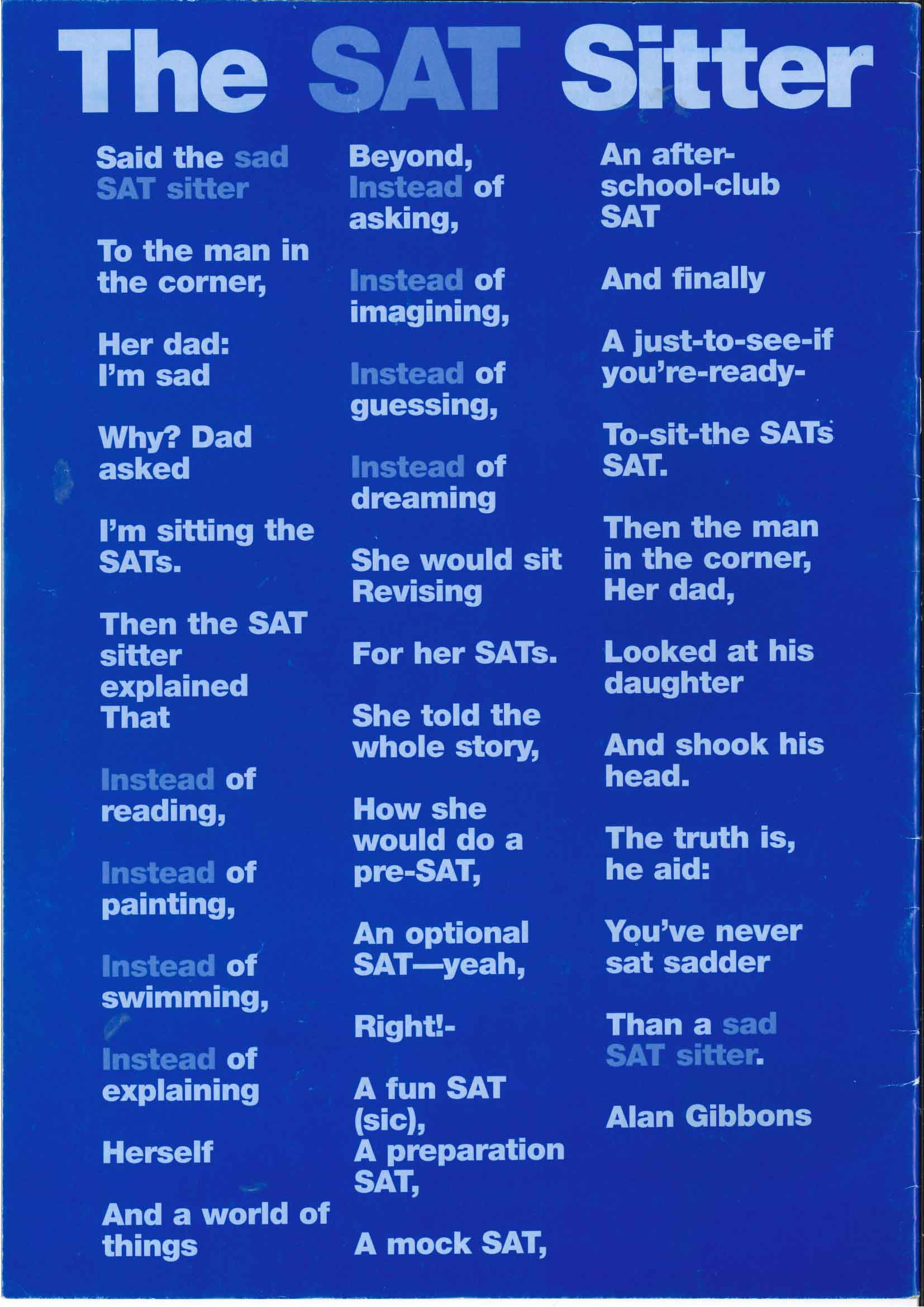 |
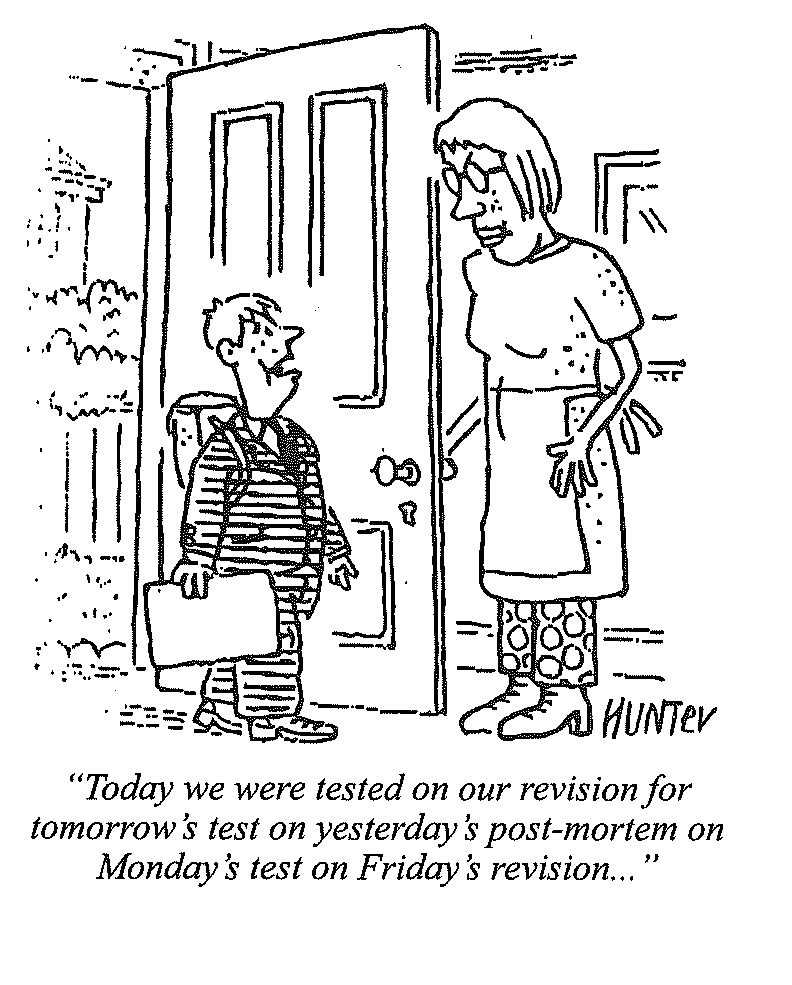 |
This cartoon from Private Eye appeared ten years ago! It was bad then and is worse now. |
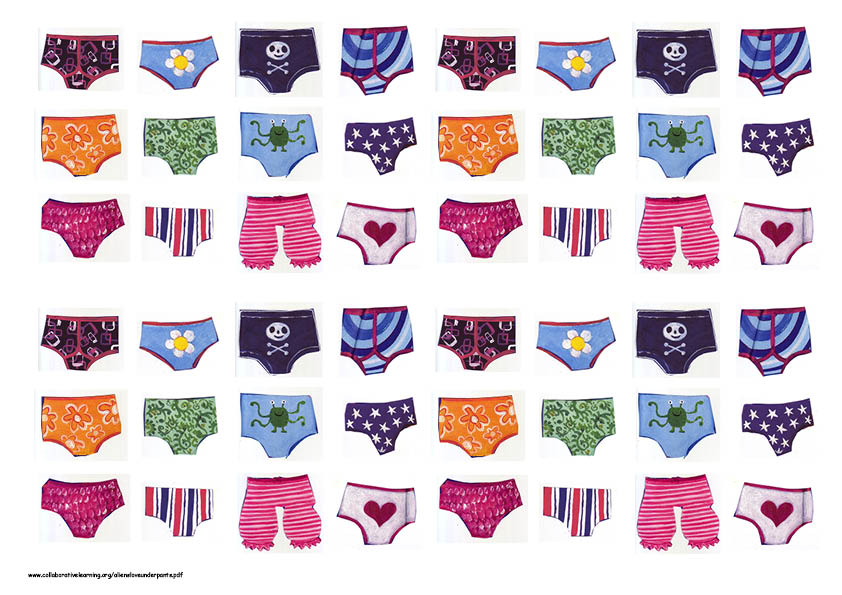 |
You have probably been receiving inumerable emails from agencies who hold your data re the new rules starting on privacy. The only data we hold at Collaborative Learning are the school emails of colleagues who want access to the early years activities which hide, somewhat ineffectively when chased by search engines, on a 'secret' early years page on our website. e.g. underpants dice/lotto. We'd be grateful if you could let us know if you are happy for us to continue to hold this information. In a few days from now, we will delete information of colleagues from whom we have not heard. |
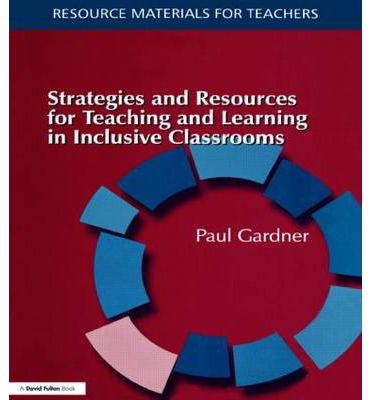
This book, one of the best explanations of the nature and value of Collaborative Learning, published in 2002, is back in the news. The Daily Mail, now a reformed character?, summarised Paul Gardner's most recent research (see on the right). His full article can be found in "English in Education" - the NATE English journal. Paul has agreed for us to show you the first chapter of this book, since it is still in print and there has not really been anything better published since. Link is on the book cover above. . |
Australian schools are better at teaching children English than schools in England, according to new research. Dr Paul Gardner, a lecturer at Curtin University's School of Education, compared the English curriculums of England and Australia - and found a significant difference in the way pupils are taught in the two countries. His study, published in the English in Education journal, says teachers in England were faced with a rigid curriculum in how they could teach the language, while Australia's curriculum allows for more creativity and flexibility. His research found that 68 per cent of England's curriculum emphasises a didactic, teacher-directed approach – with a focus on phonics, spelling and prescriptive grammar - as opposed to interactive learning. Dr Gardner, a British former academic who now lives in Australia, also found that the Australian curriculum was better at combining the basics of English with a broader socio-linguistic view of the language allowing students to reflect on and respond to a wide range of literature. |
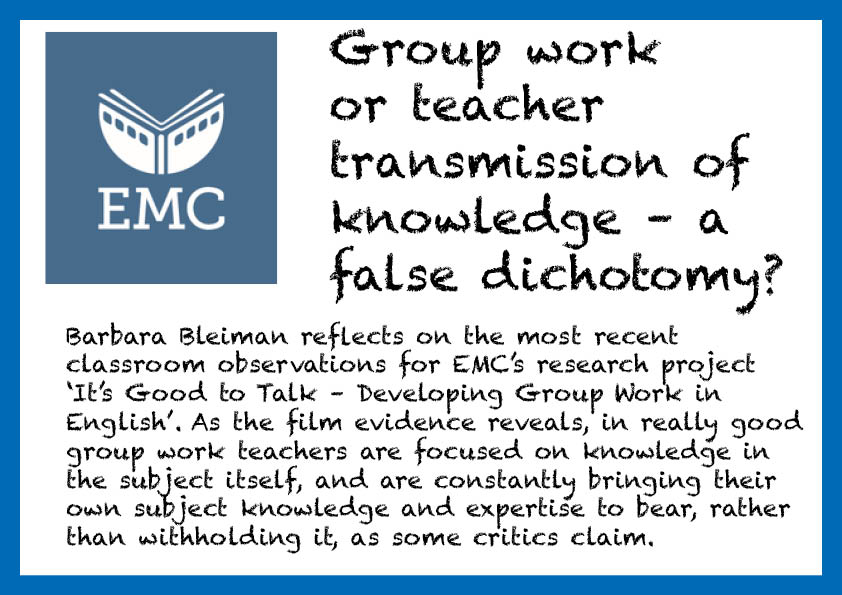
..Barbara Bleiman from English and Media centre is promoting and developing group work across the curriculum. Here is a link to her blog:
|
|
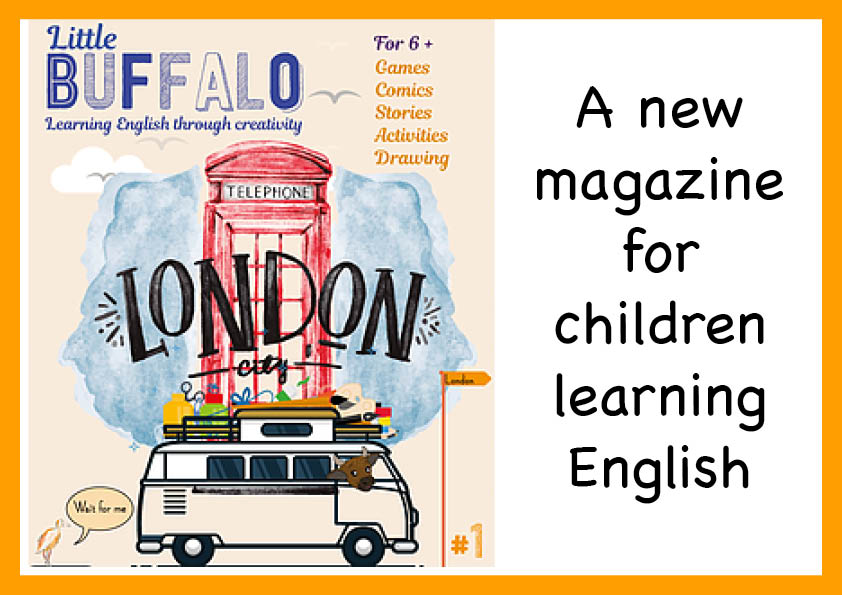
Lucy Burton has launched a new magazine for children learning English. Good luck to her! We like the graphics. Take a look at her website and download a free sample copy. She promises collaborative games.
|
|
| We like this quote a lot. | 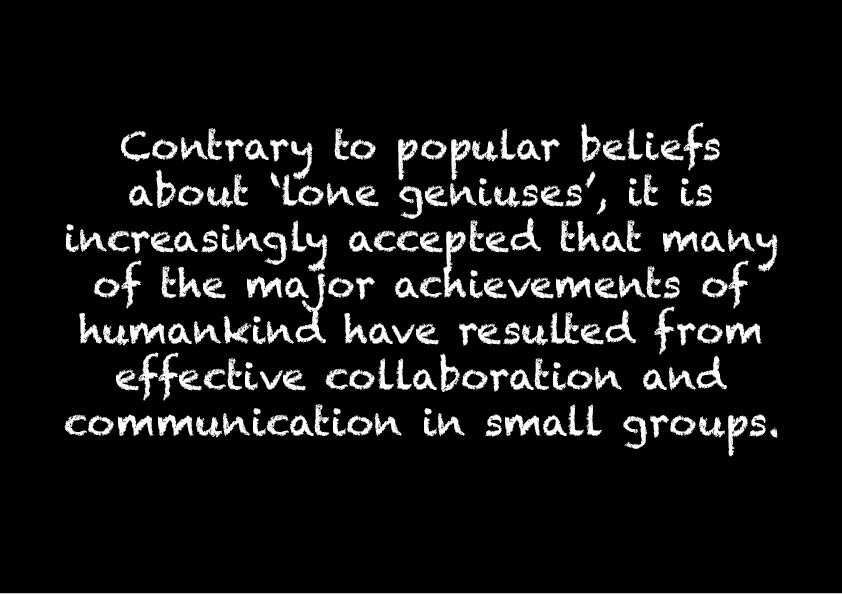 |
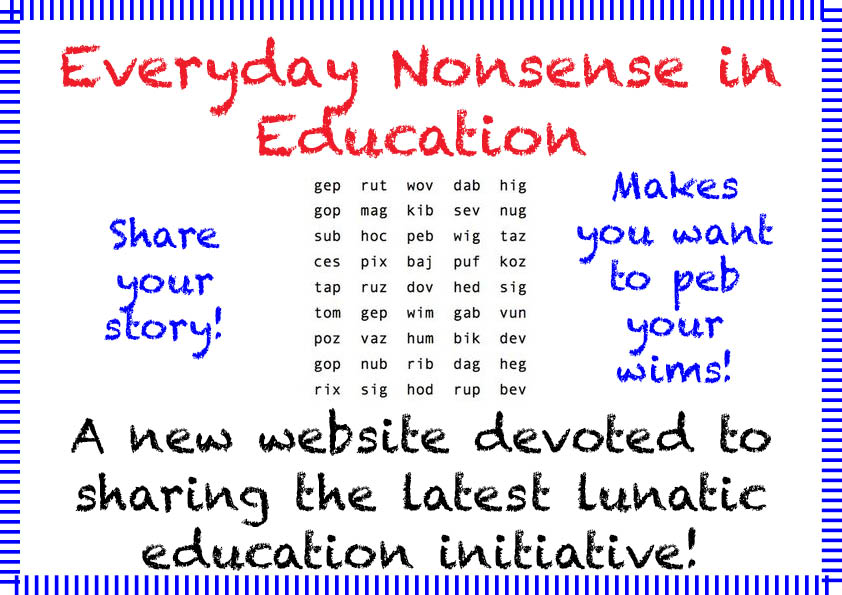
Tony Booth and colleagues have set up a website where colleagues can share, anonymously if they wish, stories of daily foolishness in conversations, jargon, directives, cuts, inspections, and feudal style management that has undermined the creativity of educators, turned schools into testing factories, distorted thinking in universities and led to many leaving teaching. Here's an example: "The school has bought into the Rising Stars test scheme. Teachers looked at the test for this half term and saw there are several things in it we have not taught our classes yet (we will teach them later in the year, but the test doesn't match the maths scheme we use). We were told we had to give the test anyway, despite already knowing most children would score 0 on a number of questions, not because they were incapable of answering them, but because they had been taught other things which did not appear in the test. Children we know are not working at, say a Year 4 level, but are in Year 4 have had to sit the Year 4 test and some have scored 0/20 as a result. The test has told the teacher nothing they didn't know already and can only have been bad for the self-esteem of those children." |
 |
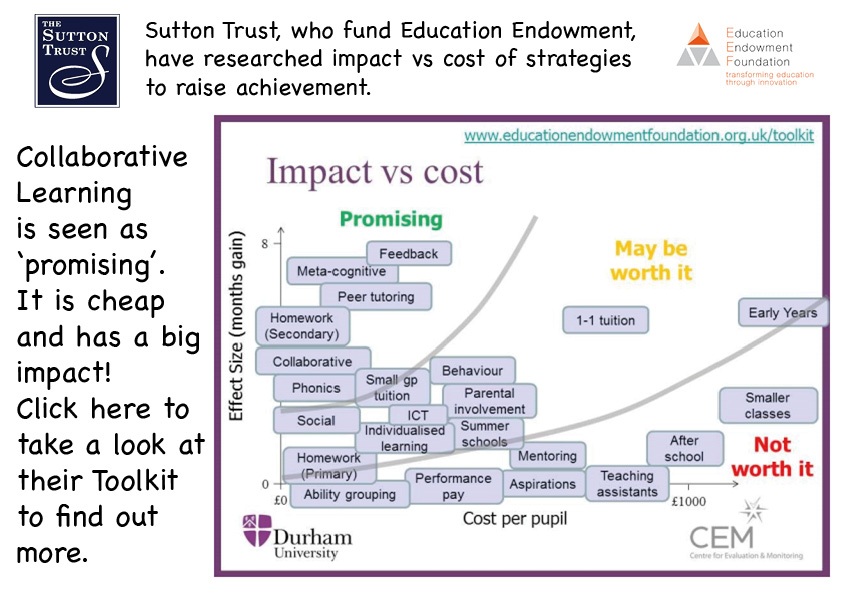
| Do take a look at the tidied up and refurbished Education Endowment Foundation site. Based on more new research on dialogue and talk, Collaborative Learning still rates highly for raising achievement and it does it very economically! Oral Language Interventions also rate highly and we believe they occur frequently in collaborative group work! Feedback is also praised highly and this is much easier to carry out in collaborative classrooms. EEF has been described as the "Which" guide to spending Pupil Premium. School uniform incidentally has a negative rating! Take a look at their recent research reports. Link on the right! | 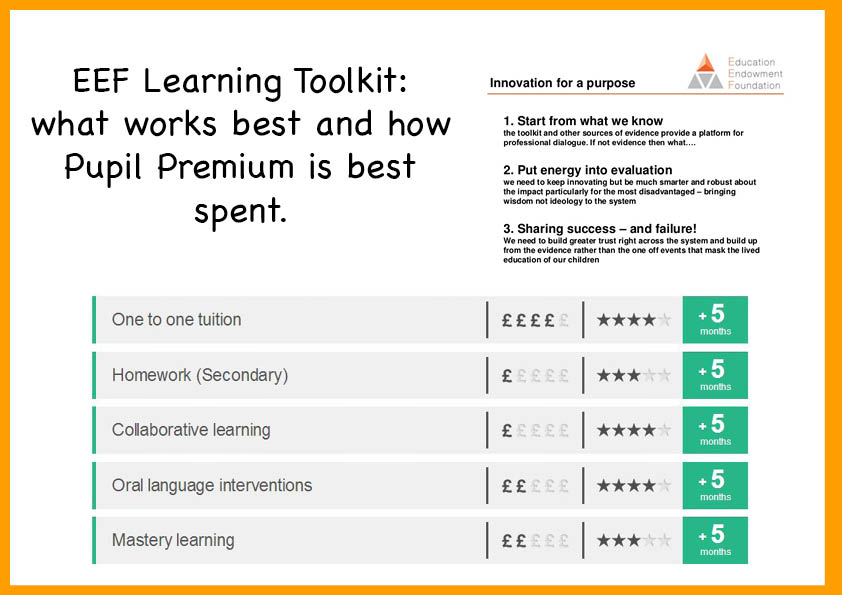 |
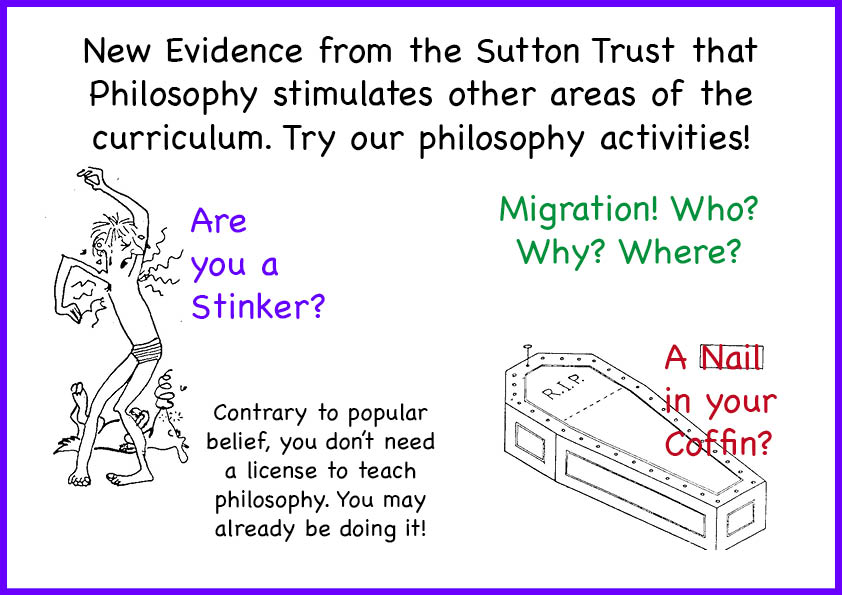
| Thank you Berkeley Primary School for posting your appreciation of Are You a Stinker? We hope you will try out more of our over the top activities such as Queasy Tum or Germ Warfare. We'd also welcome any new drawings and predicaments. Also we think you are near enough to Bradford on Avon to try out our Meet the Barn activities and make a visit. We'd welcome your feedback. | 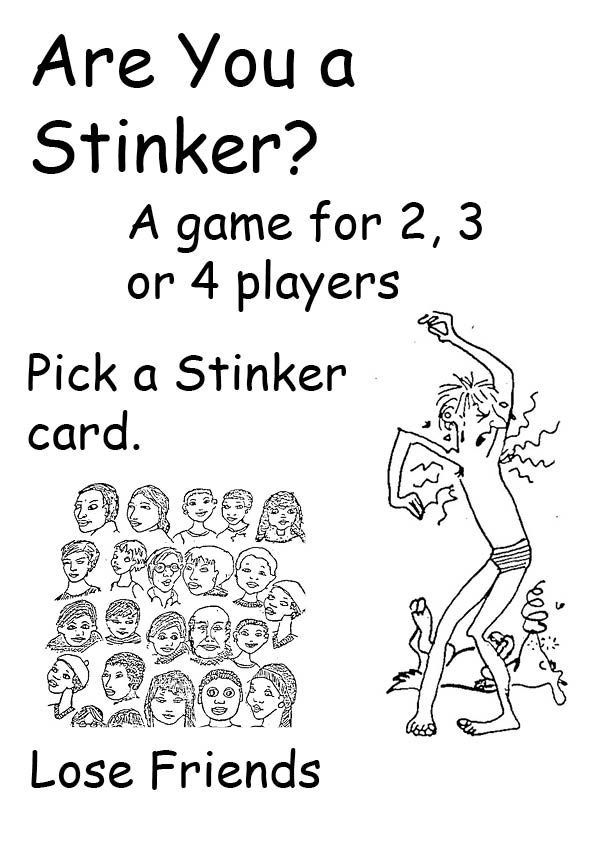 |
Well done OBE providers for choosing Raymond Briggs! He has been tickling our imaginations and stirring our consciences for yonks! Sometimes you think the gong folk stick a pin into the phone book or are open to bungs (well, we know they are!), but this time they must have listened to reason. |
|
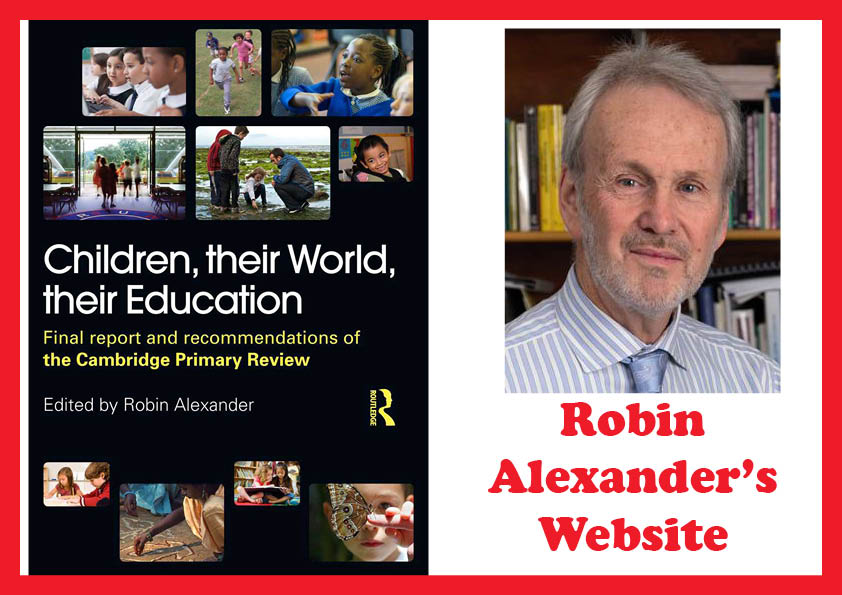
| We concentrate mainly on developing classroom resources here at Collaborative Towers, but have been worrying about the fact that we have not updated our research pages for some time. Our new research page/blog will appear soon. It has always been difficult for classroom teachers to access research so we are grateful to colleagues like Robin Alexander and the Cambridge Primary Review for self publishing. Here comes help from Kamil at Building Diversity and Equality Awareness (link on the right!). His most recent blog post has done our work for us and he has provided an excellent summary on the value of talk for learning. And he promises a second part very soon! |  |
We support and work with Kate Moorse and her network of London Primary Humanities Coordinators. If you coordinate history or geography or citizenship and would like to access the London Humanities webpage, attend network meetings and/or work with colleagues on resource development and planning, please contact us and we will give you a link to our dedicated webpage. Even if you work outside London you will find the resources on the webpage useful. We will be posting activities in development on our new Work in Progress page. |
|
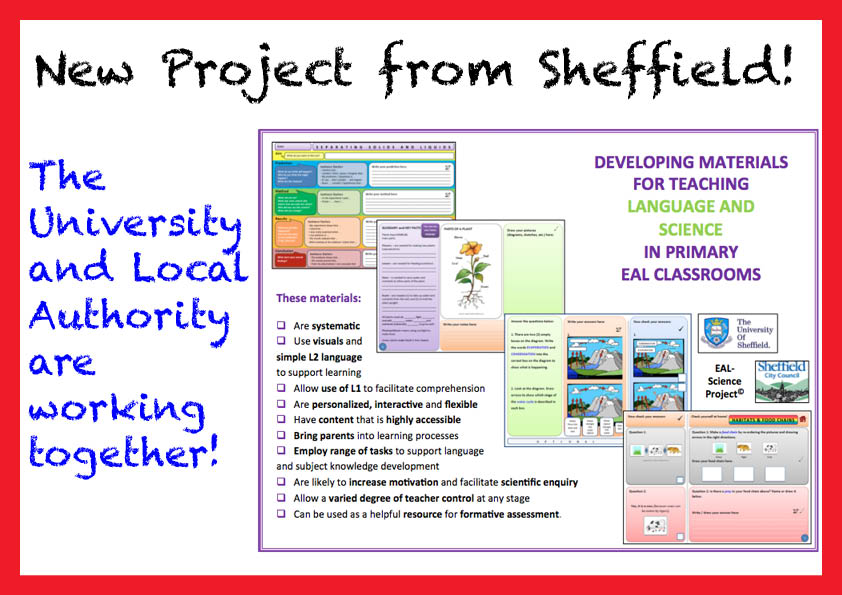
Sheffield University and Sheffield Local Authority have been working together to develop EAL friendly teaching resources for Science that involve parents and employ first language. We have a number of science activities just about to be published. |
 |
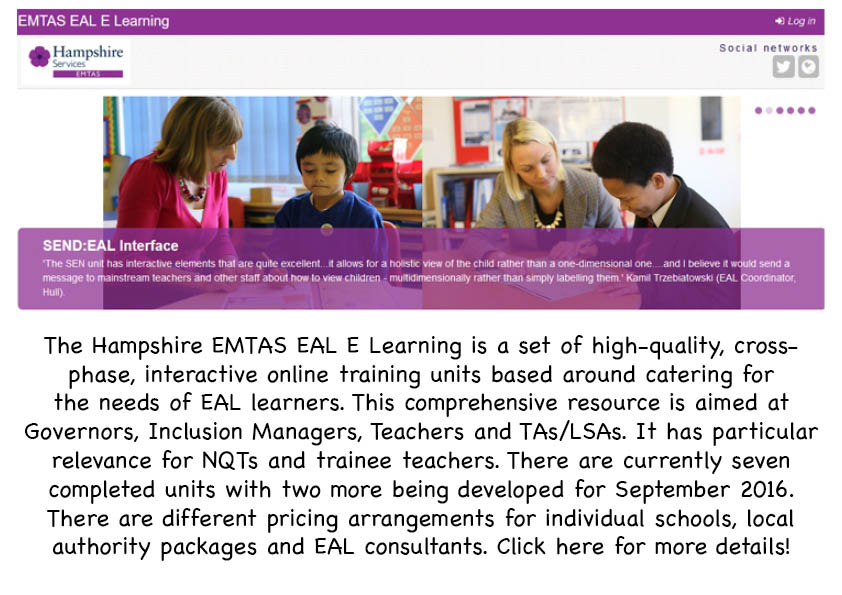
| We have just added a link (on our links page of course) to the new online EAL course set up by Hampshire Ethnic Minority Achievement service. They have worked hard to provide advice and CPD for schools. There latest link up with the London Grid for Learning is well worth investigating. |
 |
| Mark Sims, who was Ofsted lead for EAL in England, produced a series of very short video clips where he stresses the importance of opportunities for EAL pupils to hear and respond to the spoken contributions of their English speaking peers. Learning conversations are vital for these learners. You also have here a pdf of his powerpoint presentation on the inspection of EAL. | https://www.youtube.com/results?search_query=ofsted+mark+sims
http://www.collaborativelearning.org/MarkSimsEAL.pdf
|
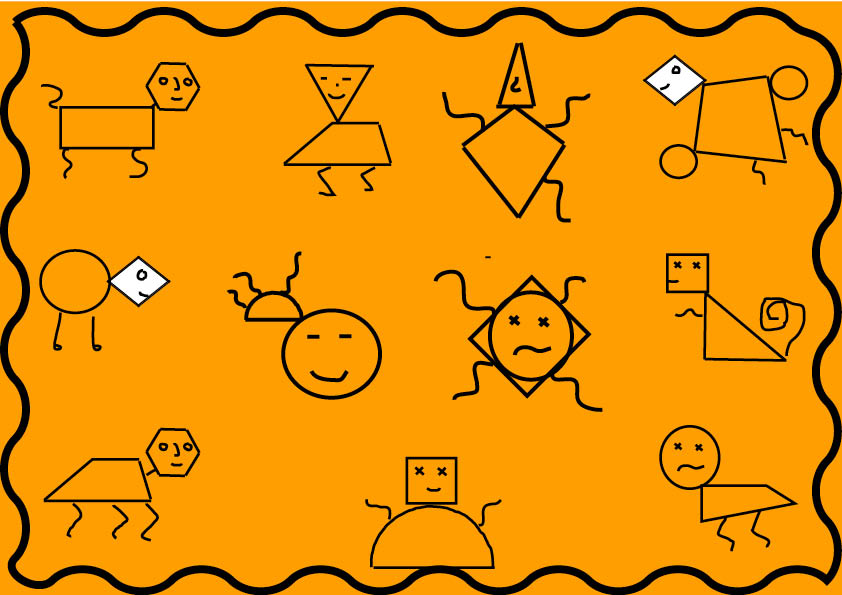
Gordon Ward at "Racing to English" is producing some very entertaining and useful videos introducing collaborative activities. Click on his shape monsters on the right to reveal his youtube channel. He has responded to nagging and produced more videos recently. P.S. You can find a link to his website on our links page.
|
 |
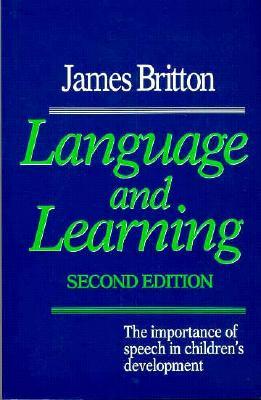
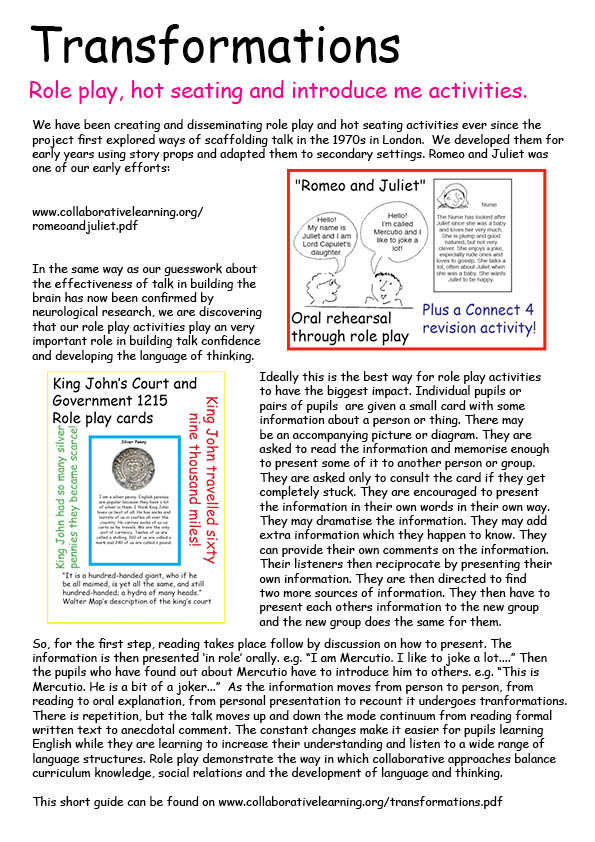
We have provided here a short one page guide to one of our most empowering kinds of resources. You can find many examples of role play activities on the site and we hope you try them out and develop your own versions. You can click on the tiny version here on the right to download a full size pdf version which we hope you will introduce to colleagues. We have also linked the main aims of the project to quotes from James Britton's work: click on his book! |
 |
 |
Is your school publishing an account of your collaborative learning work in your pupil premium impact report? We'd still like to hear from schools who are. This will help us network good practice. |
|
|
 |
 |
 |
|
 |
|
Did you register with us to use the Early Years Activities around Stories "Secret" page? We have made this page less secret and available to all for the period of the pandemic.
|
|
 |
 |
 |
I |
 |
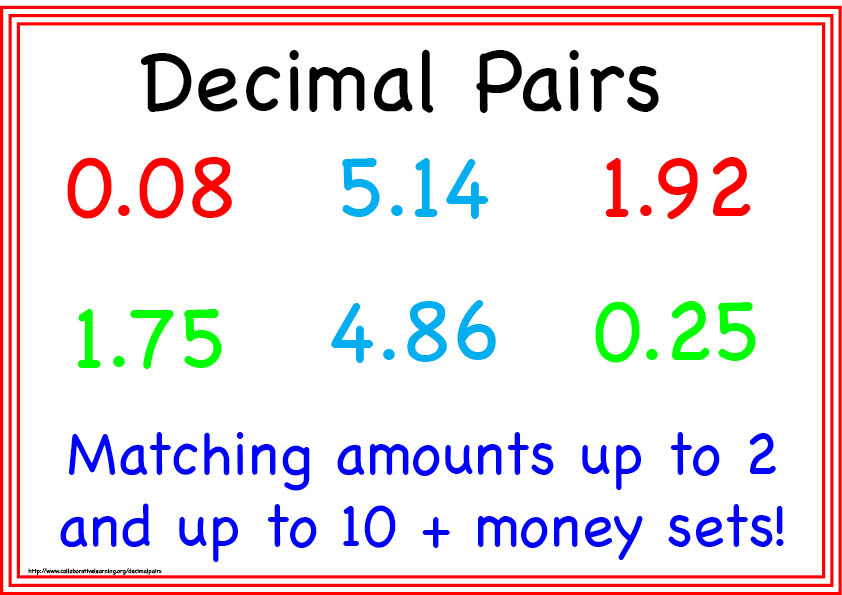
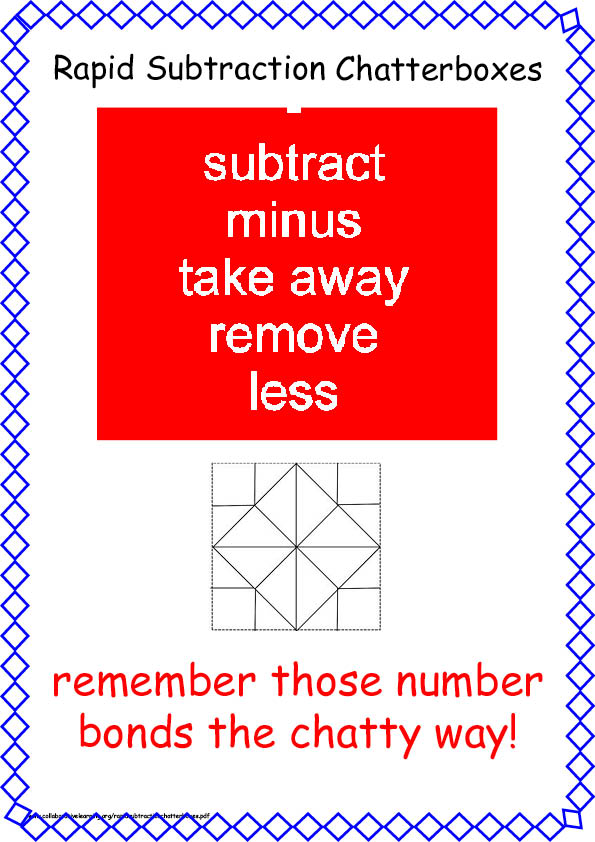
In response to the recent decision to test tables (up to 12 times to help with old pence calculations!) at the end of Primary School, here is a chatty way to encourage the learning plus some good folding practice. You will find Chatterboxes (sometimes called Fortune Tellers) useful for scaffolding talk in other subjects. In the meantime here are some mental maths Chatterboxes.
|
 |
 |
 |
|
 |
|
|
|
|
|
|