Welcome to our website!
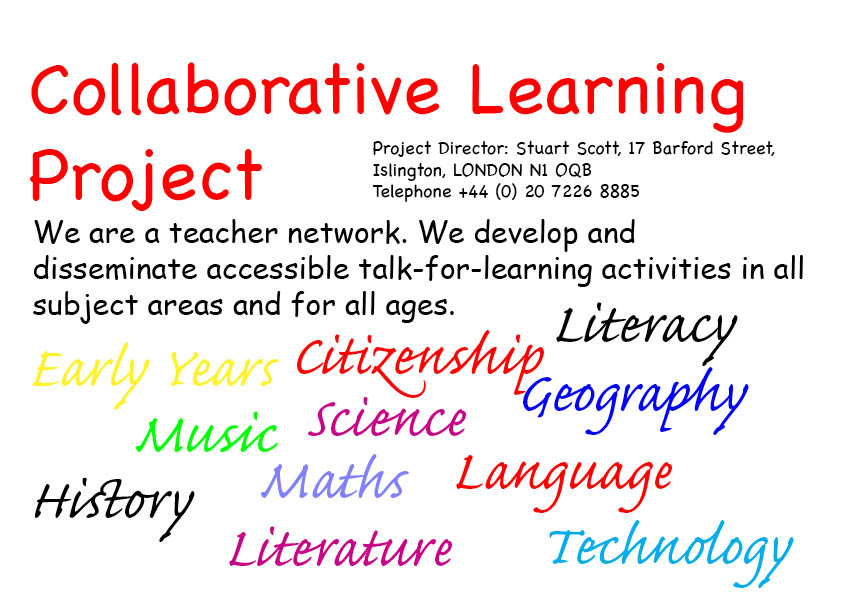
Please join our network. We hope you will download and try out our resources, adapt them to fit your curriculum planning and then share your versions with us.
Last updated:
6th July 2026
|
|
Welcome to our website!Please join our network. We hope you will download and try out our resources, adapt them to fit your curriculum planning and then share your versions with us.Last updated: 6th July 2026 |
 |
 |
 |
 |
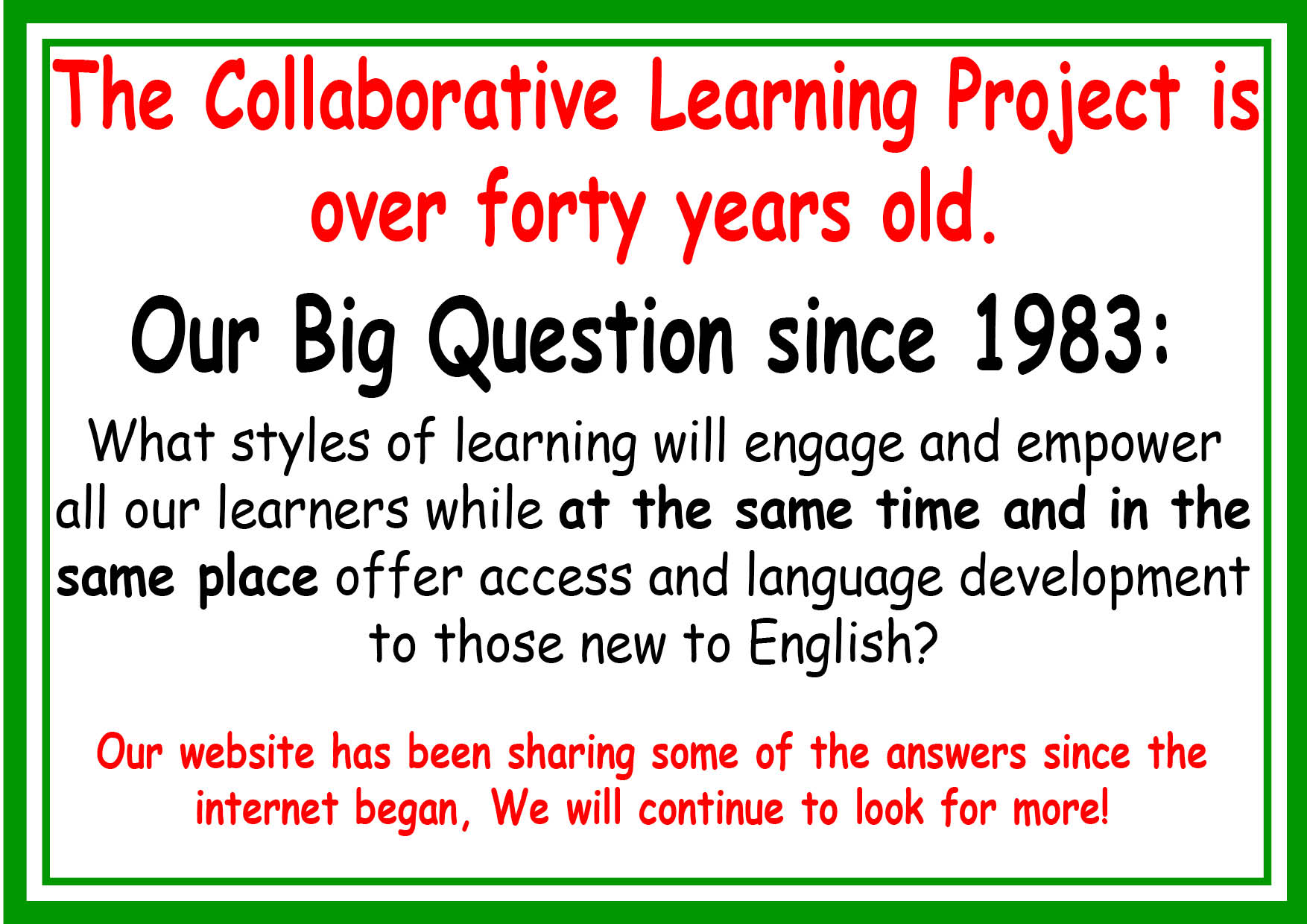
CLP helps to develop, share, celebrate and disseminate inclusive talk for learning activities in all subject areas and for all ages. CLP started out when language specialist teachers planned with subject specialists in multilingual classrooms in Birmingham, London and New York. CLP was funded by the Inner London Education Authority 1983-89 and the European Union in the 1990s. Collaborative activities are vital for learners new to English while at the same time, because they prioritise talk, they are empowering for all learners. We also believe that teachers are more creative and develop more engaging and exciting resources when they plan and work collaboratively inside and outside the classroom. We believe that playful classroom conversations evolve into purposeful and powerful dialogue: an oracy strategy firmly embedded in the curriculum. |
|
 |
 |
We explain in greater detail further down the page why Collaborative Learning is so important for teaching and learning and also provide a bibliography and research papers for those of you who would like to see more evidence.
But if you don't have time at this moment, here it is: |
 |
 |
 |
 |
Excellent for all learners,endorsed by the EEF and vital for learners new to English. Collaborative Learning activities help to create inclusive EAL friendly mainstream subject classrooms. They work with very little adaption in CLIL classrooms too! |
| Our Current Priorities: | Developing new activities to support exploratory talk in many languages around stories in early years between children and parents/teachers. Developing challenging information gap activities for well motivated late arrivals, literate in first language, in secondary schools. Improving our links with colleagues who share our approach to learning and encouraging them to share their resources. Work surrounding and scaffolding the current London Museum exhibition about Mudlarking on the Thames foreshore. |
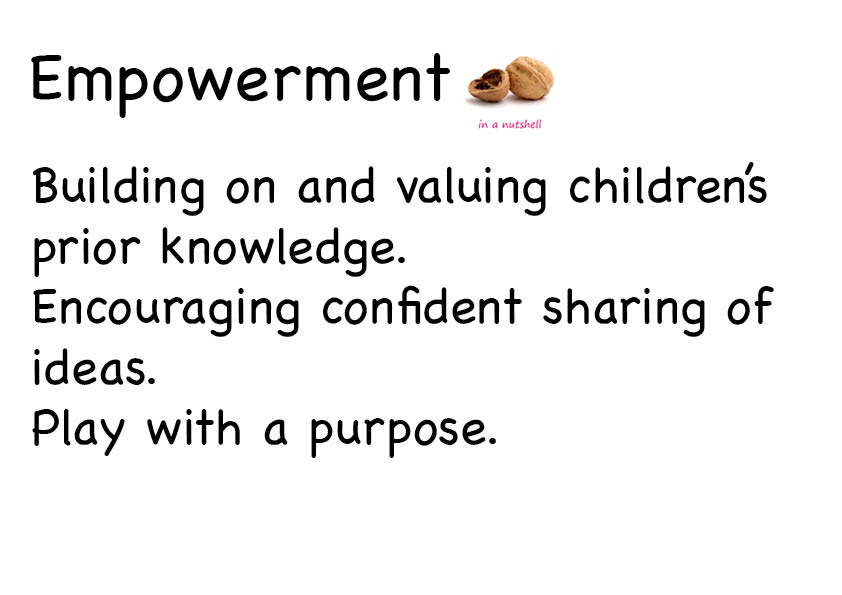
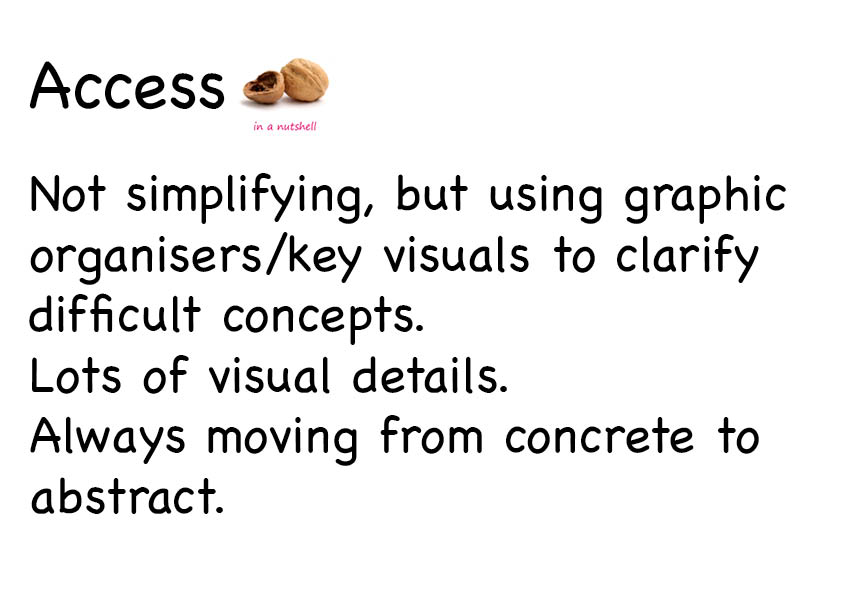
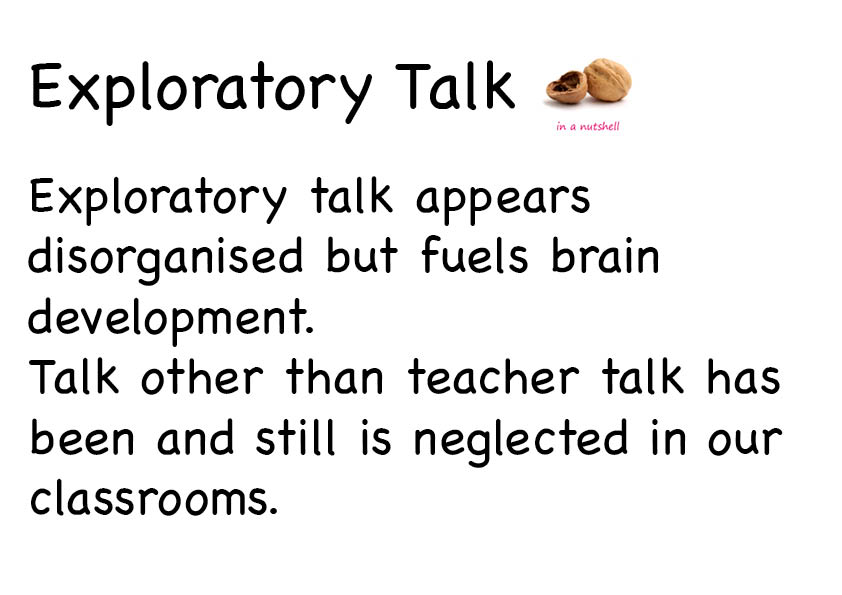
Collaborative Learning is practitioner led, has evolved over the last forty years and is still evolving. We support a creative teacher network that shares resources that scaffold talk. Our activities can be used as they are, or tweaked a little to suit different classrooms or they can be an inspiration/a template for you to develop your own resources that we hope you will in turn share with us.We have three aims: First to develop resources that empower learners by encouraging them to work with every other learner, including new arrivals to English, in their class in a playful, but purposeful and creative, way. We want to nurture emotional and social development and make learners confident in sharing what they already know....read more on our research pages... Second to make complex ideas accessible by providing ways in which they can be presented in concrete, visual, tactile and playful ways. Learners learning English while they are learning everything else thrive on challenging activities that are quickly comprehensible. We don't want to oversimplify concepts nor patronise learners, but we try to break ideas down by presenting them in case studies with lots of detail and visual examples. By providing scaffolding... read more on our research pages. Third to encourage exploratory talk in the classroom. There is increasing evidence that talk and thinking work together to develop new meanings. There is also now neurological evidence that talk fuels brain development. Unfortunately there is also evidence that talk has been and still is neglected in our classrooms and this has widened the gap in attainment. Talk is good for all learners and vital for children learning a new language while they are learning. Our activities scaffold talk for all learners and help teachers plan for the language to support thinking. They also allow learners to move confidently from social language to curriculum/academic talk and from there to informed reading and writing......read more The three aims, underpinning collaborative learning, were initially inspired by Andrew Wilkinson's ideas on oracy in Birmingham in 1966, while developing responses to the Bullock Report. They were refined during the "teachers as researchers" initiative in the 1970s and 80s in both UK and USA.The project was formally funded (1983) and nurtured by the Inner London Education Authority. Since then apart from EU support to run training in the nineties, enabled by enlightened UK HMI and civil servants, we have survived, independently, leanly and meanly, with no external funding. To find out more take a look at our history page. More important than funding, we have always believed that teachers are more creative and develop more engaging and exciting resources when they plan and work collaboratively inside and outside the classroom. These ideas of reflective practice and collaborative planning as a way of transforming education underpinned the development of LATE and NATE and has been persuasively explored in Andy Hargreaves' and Michael Fullan's book "Professional Capital". And we want these three aims to be realised simultaneously. Our partnership with Mantra Lingua has expanded the possibilities for collaborative work. They have taken some of our tried and tested activities. They have produced brilliant new attractive artwork. Their printed versions arrive laminated and the cards are perforated so they can easily be prepared for the classroom. And of course the Mantra versions are sound enabled and you can add more sound stickers if necessary. They are not prerecorded, but ready for a variety of possible uses. Here are some suggestions on how they might be used. Teachers can add the text - either the text written down or an extended version or a translation. They can make pictures talk. They can provide extra comments or instructions. Children can work together to add sound to an activity, comment on a activity or use it as a springboard to prepare oral presentation. And all the sound files can be shared with Sharelink. In the same way as we share activities and adapt them, Sharelink allows you to upload your sound files into the cloud so that others can download them for use in their classrooms. And you have access to all the sound ideas that colleagues have added to the resources. And the other way round you can download a language that is less common in your school or use other sound files to share ideas about an activity. Here are links to the History of our project and a list of commonly asked questions and answers (in html) or questions and answers in leaflet form in pdf about collaborative learning. Little booklet on collaborative learning by Steve Cooke. Would you like to support our work? We only rely on colleagues to spread the word since the project has no funding for publicity! Please download our little publicity leaflet or our even smaller publicity leaflet and hand it out to colleagues and at courses and workshops. Also if you are interested in hosting and participating in a workshop please take a look at how this could benefit your school - information here!
|
We have been in London since 1983 and on the net since there was a net. Teachers from 78% of the world's countries download our activities, but there are still schools within cycling distance that have not heard about us!So if you like what we offer and want to support us, please tell others!That is the best way you can help us enlarge our network. |
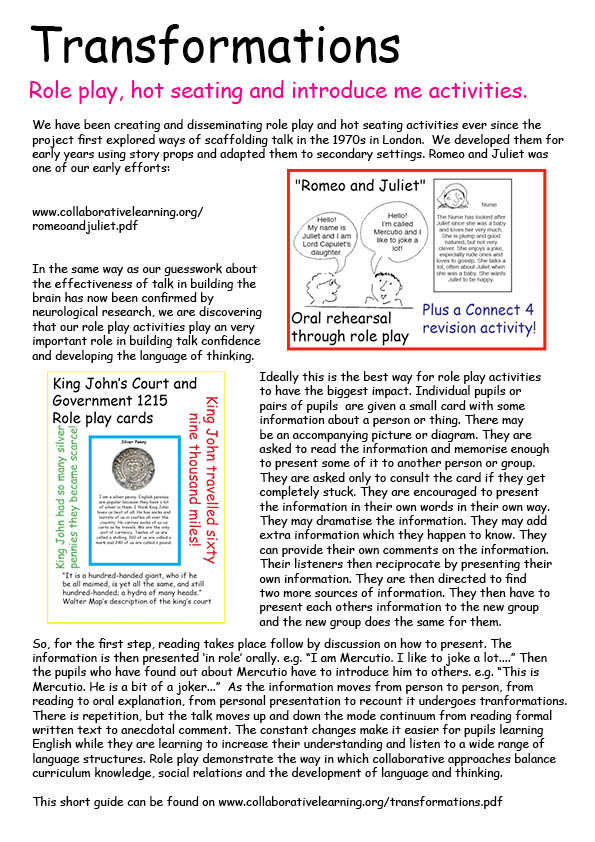
We have provided here a short one page guide to one of our most empowering kinds of resources. You can find many examples of role play activities on the site and we hope you try them out and move on to develop your own versions. You can click on the tiny version on the right to download a full size pdf version which we hope you will introduce to colleagues and use in any training. We plan to add more of these guides. |
 |
|
 |
 |
|
|
 |
 |
 |